

What Does the 10 Crore 2026 Union Budget’s Allocation for the Data Protection Board Signal?
Date Published
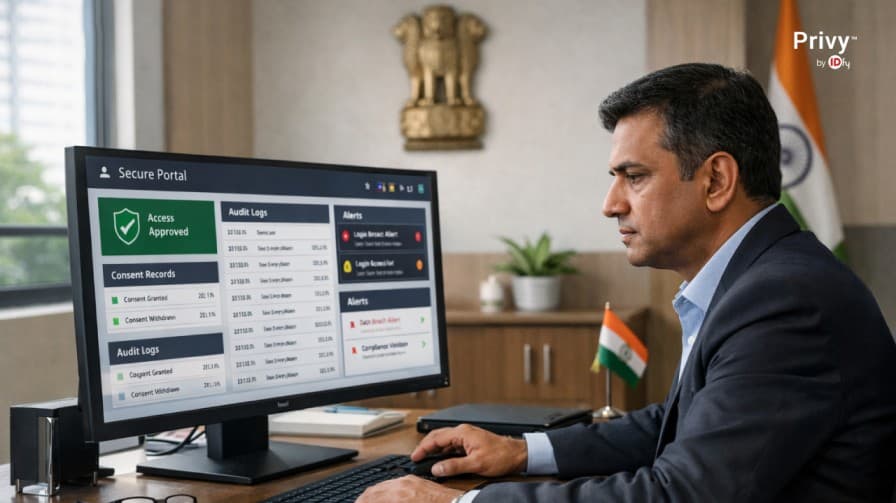
The Union Budget for the fiscal year 2026-27 has introduced a significant development for India's digital ecosystem: a distinct allocation of ₹10 crore to the Data Protection Board (DPB). This provision represents a five-fold increase from the revised estimate of ₹2 crore in the previous fiscal year.
This specific increase offers a clear indicator of the government’s roadmap. It signals that the administrative machinery for the Digital Personal Data Protection (DPDP) Act is transitioning from a preparatory phase into an operational one.
In this blog, we shall explore the role of the Data Protection Board (DPB) and how to ensure compliance with its regulatory scrutiny.
What Is the Data Protection Board (DPB)?
The Data Protection Board of India is an independent adjudicatory body established by the Central Government under the DPDP Act.
Unlike a traditional regulator that may also draft policy, a function reserved for the Central Government in this framework, the DPB acts primarily as an enforcement, inquiry, and grievance redressal agency.
Constitution and Composition
The Board consists of a Chairperson and other Members appointed by the Central Government. These individuals are selected based on specialized knowledge and practical experience in fields such as law, cyber and digital data protection, information technology, and finance. Key Functions
The DPB is tasked with four primary responsibilities:
- Inquiry and Adjudication: Investigating personal data breaches and complaints regarding non-compliance by Data Fiduciaries.
- Imposing Penalties: Levying financial penalties for violations, which can range up to ₹250 crore for severe security lapses.
- Directing Remediation: Issuing specific directions to entities to mitigate the impact of data breaches.
- Grievance Redressal: Serving as the escalation point for Data Principals (citizens) who have not received a satisfactory response from Data Fiduciaries.
What the Increase in DPB Budget Signals
The financial jump from ₹2 crore to ₹10 crore marks a critical inflection point in the DPB’s lifecycle. Initial funds in previous years were largely directed toward the setup phase. The FY 2026-2027 provision, however, is earmarked for "salary and other establishment expenses."
This suggests the Board is moving into a phase of activation. The budget supports the recruitment of technical and legal experts necessary to adjudicate inquiries and the establishment of the digital infrastructure required to process complaints at a national scale.
A Digital-First Operating Model
The Budget documents and recent DPDPA rules indicate that the DPB is designed to function as a digital-first body. The allocation will likely fund the development and maintenance of a digital ecosystem that includes:
- A Digital Portal: For the online filing of complaints and the submission of breach notifications by enterprises.
- A Mobile Application: To allow citizens to track the status of their grievances in real-time.
This infrastructure is essential for an algorithm-driven oversight model, where compliance is monitored through digital filings and data-driven signals rather than cumbersome physical paperwork.
The Timeline for Enforcement
The operational funding aligns with the projected timeline for the phased implementation of the DPDP Act. The current mandates suggests a structured rollout:
- November 2026: Provisions related to Consent Managers are expected to come into force (approximately one year post-notification).
- May 2027: Broader substantive obligations for enterprises, including issuance of penalties, will likely be enforced (approximately 18 months post-notification).
FY 2026-2027, therefore, serves as the "bridge year." It is the window during which the regulator builds its capacity before full-scale enforcement begins.
Strategic Priorities for Enterprises in FY 2026-2027
With the DPB transitioning into an operational state, Organizations must switch their focus to building "evidence-based" compliance.
1 . Treat Breach Reporting as a Product
Breach reporting cannot be a vague emergency response; it must be a defined product workflow. Organizations need to create decision trees and templates to ensure valid notifications can be sent to the Board's digital portal within strict statutory timelines.
2 . Modernize Consent Operations
As interoperable platforms for Consent Managers become active, enterprises must ensure their systems can technically integrate with this ecosystem. The ability to handle consent withdrawals and updates seamlessly across channels will be a key compliance metric.
3 . Maintain the Evidence Logs
Compliance is only as good as its proof. Companies need to map their security controls to specific legal requirements. By maintaining evidence logs such as audit records and consent artefacts, it is ensured that if the DPB initiates an inquiry, the organization can immediately demonstrate the "reasonable security safeguards" it had in place.
4 . Identify High-Risk Areas
Not all data and third-party vendor requires the same level of protection. Organizations must define their highest-risk data assets and vendors and align their strictest monitoring and access controls to those specific processing activities.
Conclusion
The ₹10 crore allocation to the Data Protection Board is more than a fiscal statistic; it is a statement of intent. The government is funding the board to enforce the law, and it is building its machinery to be digital, efficient, and scalable.
Enterprises that use FY 2026-2027 to operationalize their privacy frameworks,moving beyond static documents to dynamic processes, will enter the enforcement era with significant leverage.
How Privy by IDfy Can Help You Operationalize Compliance
The era of managing privacy through static policy documents and manual spreadsheets is ending. A digital-first regulator requires an automation-driven privacy posture.
At Privy, we believe that compliance should not be a bottleneck, but a streamlined operational layer that builds trust. We help organizations move beyond theoretical readiness to actual execution.
Here is how we help you prepare for the FY 2026-2027 privacy operationalization phase:
- Purpose-Driven Consent Governance: We help you implement granular consent architectures that integrate seamlessly with your tech stack, ensuring every data point is processed with valid, retrievable proof of consent.
- Timely Notifications For Data Breaches: We assist in building the decision trees and reporting templates necessary to meet strict notification timelines in cases of data breach without .
- Risk-Scored Data Governance & Third Party Risk Management : Our modules connect Vendor Risk Management with data processing visibility, ensuring you know exactly which third parties hold your data and whether they are compliant with the mandates. The risk-scoring system ensures you are aware of all the high-risk datasets and vendors to monitor closely.
- Continuous Compliance : From Gap Assessements to Privacy Impact Assessments (PIAs), we ensure your compliance is documented, indexed, and ready for regulatory scrutiny.
If your organization is looking to bridge the gap between legal requirements and technical reality, we can help you build a privacy framework that works in practice, not just on paper.
Reach out to us at shivani@idfy.com to explore how Privy can help you stay ahead of the DPB’s activation curve.
.jpg&w=3840&q=75)
Learn why DPDP readiness for banks is important and how Privy can help in DPDP compliance for the banking sector.

Explore how DPDP rules are reshaping the balance between personalisation and privacy, enabling consent-based personalisation and driving data minimisation compliance in India’s digital economy
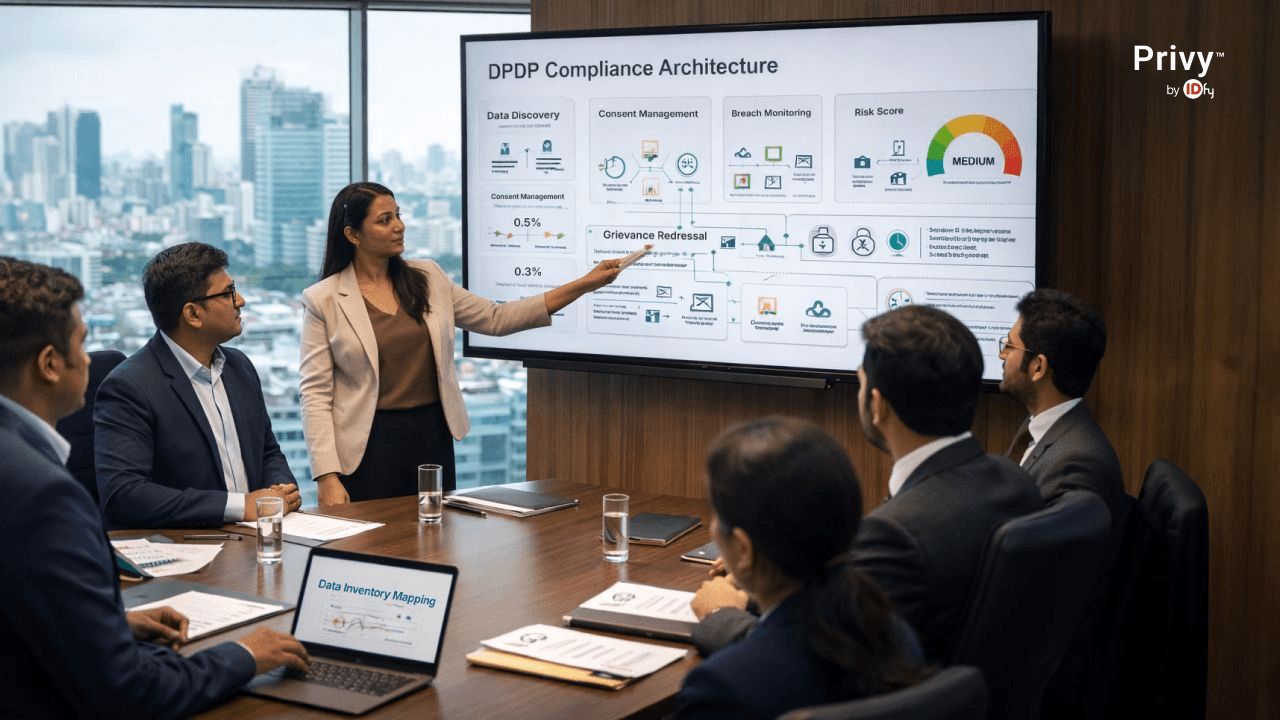
Discover where Indian enterprises stand on privacy maturity today. Insights from Justice Srikrishna and industry leaders on navigating the DPDP, 2023

Learn how Indian enterprises can operationalize DPDP compliance at scale through privacy operations, consent governance, breach readiness, and automated workflows.

A joint MIT Sloan Management Review India and IDfy study reveals how large enterprises are operationalizing privacy beyond consent under India’s DPDP regime.