

DPDP Readiness for Banks | What Banking Institution Must Do After DPDP Rules
Date Published
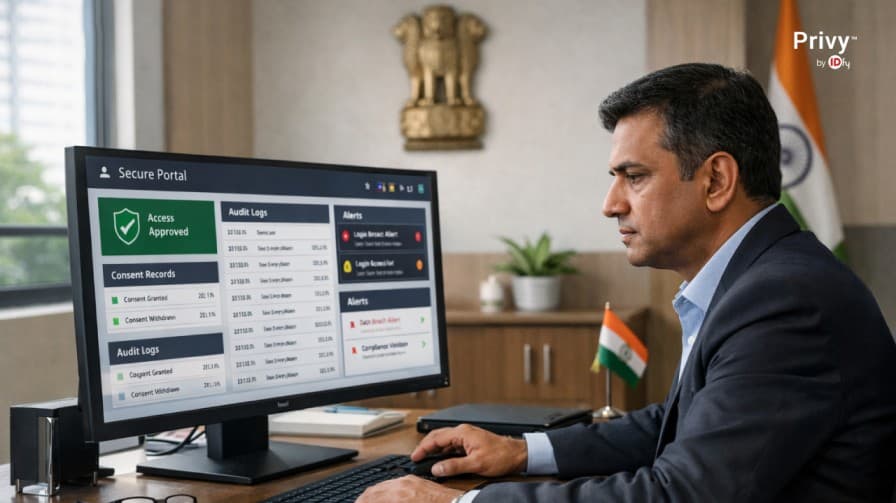
.jpg&w=3840&q=75)
The Digital Personal Data Protection (DPDP) rules have brought in a pivotal shift in the data protection framework of India, setting up clear guidelines for handling personal data. For the Banking, Financial Services, and Insurance (BFSI) sectors, which are instrumental in processing large amounts of sensitive customer data, this legislation is more of a strategic imperative than just another compliance requirement.
The DPDP rules foster customer trust, strengthen the data security features, and also enhance the regulatory alignment, thereby making it a cornerstone for a customer-centric and resilient BFSI ecosystem. In this blog, we will discuss the readiness of banks for DPDP rules and why it matters for them, and what the next steps are for the BFSI industry.
Why DPDP Matters for Banks: Impact & Imperatives
The Indian payments and banking ecosystem is evolving at an unprecedented rate, fueled by UPI growth, financial inclusions, and digital adoption. This has led to the expansion of access to millions of users, many of whom also engage in their local language and have now become a part of the financial system. This multilingual approach not only comes with an opportunity but also comes with its own set of complexities.
As multilingual data flows across various systems and languages, it is critical to secure and manage this data from a regulatory point of view. Starting from ensuring accuracy in data classification to protecting against risk and fraud, meeting these evolving data governance laws, and securing multilingual data has become a strategic imperative for every financial institution.
The DPDP rules are a critical landmark for the BFSI sector of India with their far-reaching implications. This act leads to a more secure and trustworthy financial ecosystem that strengthens data protection, empowers individuals, and also enforces strict data handling standards. Proactive compliance is no longer a legal requirement, but it has now become a strategic necessity for the BFSI institutions to enhance brand reputation, build customer trust, and stay competitive.
Key Challenges for Banks in DPDP Readiness
The implementation of the DPDP rules also comes with its set of challenges for the BFSI sector. Some of these include training employees on compliance requirements, adapting the existing processes and systems to the new laws, and streamlining consent management.
However, as much as these challenges exist, they also serve as an opportunity to enhance the data governance framework, foster greater trust and transparency with customers, and fortify the cybersecurity measures. With a proactive approach to these aspects, BFSI organisations can strengthen trust, ensure compliance, and can also improve operational resilience and drive long-term business growth in the ever-evolving regulatory landscape.
Why Early DPDP Readiness Gives Banks a Strategic Advantage
1. Building Customer Trust and Confidence
In the BFSI sector, trust isn’t just important; it’s the foundation of every customer relationship. The DPDP Act 2023 strengthens this foundation by giving individuals far more control over their personal data, including the right to access, correct, or request deletion under certain conditions. When BFSI institutions align with these principles, they signal a clear commitment to privacy and responsible data use, which naturally boosts customer confidence.
Taking a proactive approach here does more than just ensure compliance; it becomes a meaningful differentiator at a time when data protection plays a major role in customer loyalty and long-term business growth.
2. Enhanced Regulatory Compliance
BFSI companies in India already operate within a dense regulatory environment shaped by bodies like the RBI, SEBI, and IRDAI. The DPDP Act 2023 adds a unified data protection framework on top of this, ensuring that personal data is handled responsibly across the entire sector.
Staying compliant with the DPDP Act reinforces an organisation’s broader legal obligations around digital personal data. It also reduces exposure to penalties, scrutiny, or legal disputes, ultimately strengthening operational resilience and customer trust.
3. Strengthening Data Security
Given the volume of sensitive financial and personal data they manage, BFSI organisations are high-value targets for cyberattacks and breaches. The DPDP Act 2023 raises the bar further by mandating strong security safeguards to prevent breaches and requiring prompt notifications to the Data Protection Board of India and to customers if an incident occurs.
By following these strengthened security requirements, BFSI institutions can improve their cyber readiness, reduce breach risks, and protect customer trust and brand reputation in an increasingly hostile threat landscape.
4. Promoting Responsible Data Handling
The DPDP Act 2023 is built around key principles like purpose limitation, data minimisation, and clear storage boundaries. For BFSI organisations, this means collecting only what’s necessary, using it for well-defined purposes, retaining it only for as long as needed, and ensuring its accuracy and integrity at all times.
By embedding these responsible data practices into daily operations, BFSI firms can significantly reduce risks related to data misuse, strengthen compliance, and reinforce their reputation for safeguarding personal information.
5. Enabling Innovation with Safeguards
While the Act focuses heavily on protection, it also recognises the importance of innovation. For BFSI companies, this creates room to use data for customer insights, risk modelling, and personalised services, provided the processing is lawful, transparent, and based on valid consent.
This balance between innovation and accountability gives BFSI organisations a clearer legal framework to improve customer experience, make smarter decisions, and accelerate growth, all while staying aligned with the DPDP Act.
Key Aspects of the DPDP Act Relevant to BFSI
Several provisions of the DPDP Act 2023 are particularly important for BFSI organisations:
- Consent Requirements: Firms must obtain explicit, informed consent before processing personal data, except in a limited set of legitimate scenarios.
- Data Security Obligations: Strong technical and organisational safeguards are mandatory.
- Data Breach Notification: Breaches must be reported promptly to both the Data Protection Board and affected customers.
- Data Retention Policies: Data must be stored only for as long as it is required for the intended purpose.
- Rights of Data Principals: Customers must be able to access, correct, and request deletion of their personal data through clear, accessible mechanisms.
- Obligations for Significant Data Fiduciaries: Many BFSI entities will fall into this category due to the scale and sensitivity of the data they process, requiring the appointment of a Data Protection Officer (DPO) and the execution of Data Protection Impact Assessments (DPIAs).
What a DPDP-Ready Roadmap for Banks Should Look Like
As the deadline for compliance draws nearer, banks need a clear, structured roadmap not just to meet regulatory expectations but to modernize the very backbone of their data governance. A practical DPDP readiness checklist for banks starts with establishing visibility, building a consent-first approach, strengthening third-party oversight, and creating an incident-ready culture.
Below is a 90-day blueprint that helps banks move from uncertainty to measurable progress, laying the foundation for long-term, sustainable privacy governance.
1. Gap Assessments & Personal Data Discovery
The first step toward DPDP compliance in banking is understanding where personal data resides across the institution. This means scanning legacy systems, CRMs, LOS/LMS stacks, data lakes, and offline repositories to build an accurate and complete data inventory.
Banks should:
- Discover and classify all personal data assets
- Map data flows across departments and systems
- Identify all data processors and validate contracts
- Flag non-compliant patterns, blind spots, and policy gaps
This exercise is essential for strengthening banking data governance in India, where information silos and legacy infrastructure often hide significant risks.
KPIs to Track:
- % of internal policies reviewed and updated
- % reduction in privacy and security risks annually
2. Consent Lifecycle Management
With multilingual customers and diverse onboarding channels, consent management has become one of the biggest challenges in data privacy for banks in India. Modern banking requires granular, itemized notices, traceable consent artefacts, and transparent user rights management.
Banks must:
- Partner with a tech platform capable of multilingual consent capture
- Deploy auto-translated, purpose-specific consent notices
- Enable grievance redressal and Data Principal rights fulfillment
- Implement cookie banners and digital notices across properties
KPIs to Track:
- % of Data Principal requests resolved within the defined TAT
- % of privacy notices served, tracked, and accepted
3. Third-Party Risk Management
Every bank relies on a complex network of fintech partners, processors, payment gateways, BC agents, analytics vendors, and loan service providers. The DPDP Act places clear obligations on data fiduciaries to ensure processors follow compliant practices.
Banks should:
- Build a processor registry with risk ratings
- Map each processor to specific activities and purposes
- Identify contract gaps and implement compliant clauses
- Track data movement and processing obligations across partners
KPIs to Track:
- % of data transferred to third-party processors
- % of processors categorized as high-risk
- % of processors meeting mandated controls
This structured view becomes essential as external relationships increasingly influence compliance maturity.
4. Incident Management Excellence
Under DPDP, breach notification timelines are strict, and non-compliance can lead to significant penalties. Banks need rapid detection, coordinated response, and actionable reporting mechanisms.
Banks must:
- Conduct breach-response simulation drills
- Review alerting systems and detection workflows
- Draft clear notification templates for authorities and customers
- Update breach playbooks based on simulation gaps
KPIs to Track:
- % of incidents detected and reported within TAT
- % reduction in avoidable escalations
This capability is no longer optional. As DPDP for banks evolves, regulators will expect a consistent demonstration of preparedness.
How Privy by IDfy Enables DPDP Readiness for Banks | Use Case Demonstration
For BFSI institutions, meeting DPDP requirements is not just about policy; it’s about deploying systems that can operationalize compliance at scale. Privy by IDfy delivers this through a full-stack privacy and consent governance layer tailor-made for India’s regulatory landscape.
1. End-to-End Consent Lifecycle Governance
Privy helps banks collect, manage, verify, and store consent across every touchpoint, branch, mobile apps, partner systems, and onboarding journeys. With multilingual support and auto-translated notices, banks can serve India’s diverse user base without compromising compliance.
What this solves:
- Fragmented consent trails
- Unverifiable offline consents
- Inconsistent notices across applications
2. Real-Time Data Discovery and Risk Monitoring
Privy’s discovery engine automatically identifies personal data, misclassified fields, risky data flows, and outdated permissions across systems. This brings clarity to sprawling banking infrastructure
What this solves:
- Hidden data silos
- Missing audit evidence
- Unmapped third-party transfers
3. Automated Data Principal Request Fulfillment
Privy lets banks handle access, correction, and deletion requests through automated workflows, something that manual teams struggle with at a banking scale.
4. Third-Party Accountability Built In
Privy maps data processors to consent purposes, flags risk scores, and provides dashboards for partner governance. What this solves:
- Poor oversight of processors
- High risks in BC and fintech partner ecosystems
- Lack of demonstrable evidence for audits
5. Incident-Response Readiness with Evidence Trails
By linking data, processors, consents, and events in a single system, Privy allows banks to respond faster and more confidently during breaches.
What this solves:
- Delays in breach assessment
- Missing documentation for notifications
- High exposure to DPDP fines and scrutiny
Privy doesn’t just help banks comply; it helps them run privacy like a strategic capability.
Recommendations & Next Steps for Banks
As the DPDP Act moves closer to full enforcement, banks should focus on immediate, high-impact actions:
- Prioritize leadership ownership: Data privacy must sit at the CXO and Board level.
- Modernize legacy processes: Replace manual consent collection and Excel-based tracking with governance tools.
- Train frontline teams: Branch staff, contact centers, and ops teams need hands-on clarity about notices, rights, and escalation handling.
- Strengthen multi-language governance: Notices and rights fulfillment should be accessible in every customer’s preferred language.
- Build audit-proof evidence trails: Regulators will expect demonstrable compliance backed by artefacts, not just policy documents.
Early adoption of structured DPDP frameworks will help banking institutions scale confidently while reducing regulatory exposure.
Conclusion
The DPDP Act marks a turning point for data privacy for banks in India, redefining how financial institutions collect, use, and protect customer information. What may seem like a regulatory burden today is, in reality, a chance to rebuild customer trust, modernize data practices, and strengthen long-term resilience.
Banks that invest early using the right tools, processes, and governance frameworks will not only meet the law’s expectations but also achieve a significant strategic advantage. Platforms like Privy by IDfy give banks the capabilities they need to operationalize compliance, reduce privacy risks, and build a strong, customer-first data culture.
In an industry where trust is currency, DPDP readiness is not just compliance work; it’s future-proofing. Get in touch with us at shivani@idfy.com to take control over your data with India’s most trusted DPDP compliance platform. We will keep you updated on the latest developments regarding the DPDP rules and how they will impact your business. Stay glued to this space for more information on data, privacy, compliance, and all things DPDP.

Explore how DPDP rules are reshaping the balance between personalisation and privacy, enabling consent-based personalisation and driving data minimisation compliance in India’s digital economy
Analyze the implications of the allocation of ₹10 crore in the FY 2026-2027 budget for the Data Protection Board. Understand the shift from setup to activation, the digital-first operating model, and what enterprises must do to prepare for the DPDP Act enforcement

Discover where Indian enterprises stand on privacy maturity today. Insights from Justice Srikrishna and industry leaders on navigating the DPDP Act 2023, ROI, and systemic compliance.

Learn how to operationalise DPDP compliance at scale. Insights from industry leaders on privacy operations, breach management, and moving beyond manual policies.

A joint MIT Sloan Management Review India and IDfy study reveals how large enterprises are operationalizing privacy beyond consent under India’s DPDP regime.