

When AI Causes a Data Breach: An Incident Response Guide for DPDP
Author
aishwarya
Date Published
The first three parts of this series covered training data, model outputs, and vendor risk. This final part covers what happens when something goes wrong despite all of that: an AI system exposes personal data it should not have, and the clock starts.
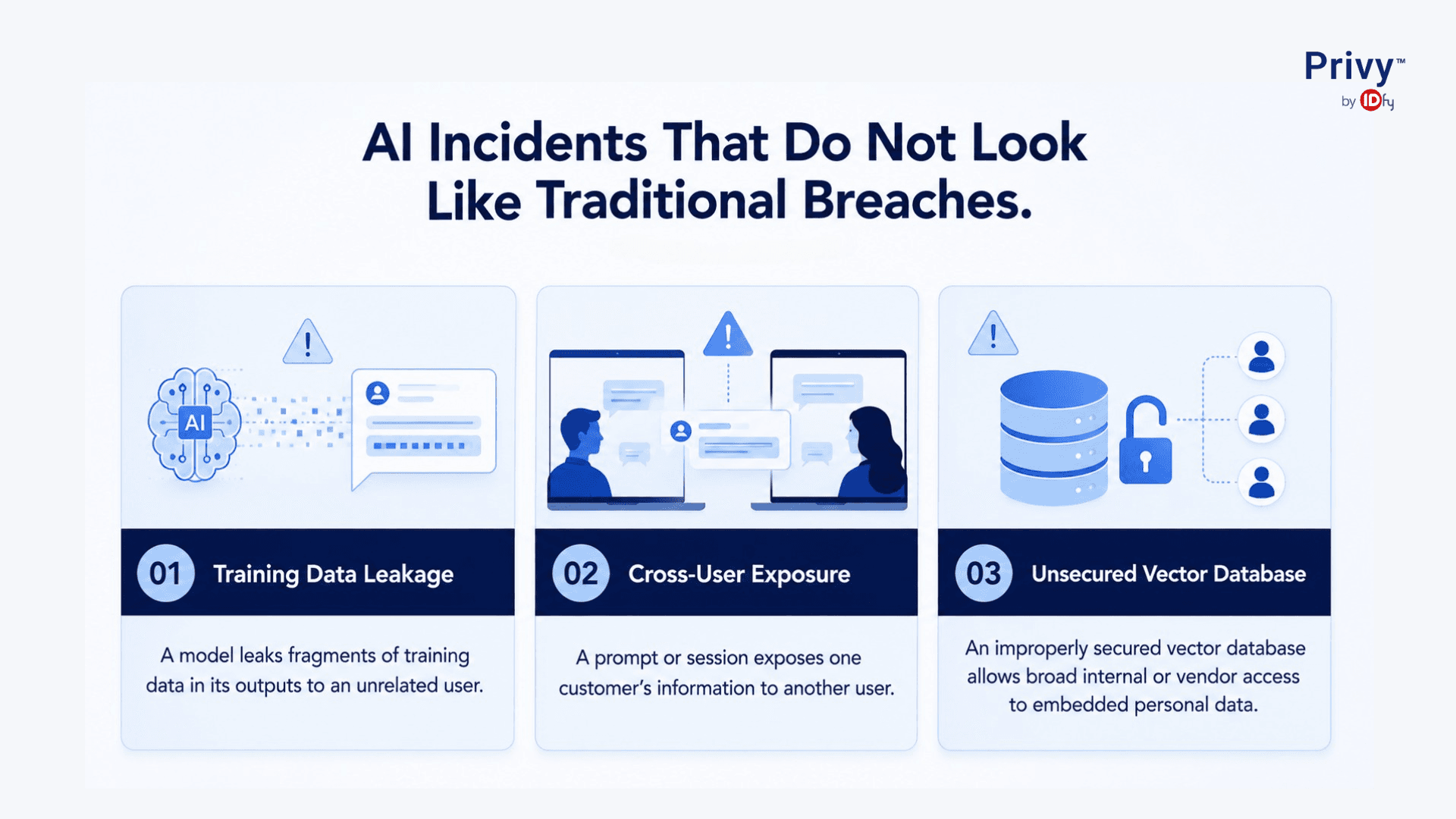
Most incident response plans were written with traditional breaches in mind: a database is accessed without authorisation, a laptop is stolen, or an email is sent to the wrong recipient. AI systems fail in ways that don't always look like those scenarios, and a response plan that doesn't account for that will struggle when an AI-specific incident happens.
What an AI-Driven Breach Actually Looks Like
An AI system can cause a personal data breach without anyone gaining unauthorised access to a database in the traditional sense. A model that leaks training data fragments in its outputs, a prompt that exposes one customer's information to another user's session, and a vector database with no access controls that a vendor's support staff can query freely – none of these look like a conventional hack, but each one meets the legal definition of a personal data breach if personal data is exposed.
This distinction matters because DPDP's 72-hour reporting timeline starts from the moment the organisation becomes aware of the breach, not from the moment it is officially confirmed or fully understood. An AI-driven exposure that takes longer to recognise as a breach, because it does not look like one at first, eats into that window before the response process even formally begins.
Why AI Incidents Take Longer To Detect
Traditional security monitoring is built to catch unauthorised access: failed logins, unusual data transfers, and privilege escalation. AI-driven exposure often does not trigger any of these signals, because the system is doing exactly what it was technically authorised to do, just in a way that exposes personal data it should not have.
A model answering a user's question with information from another user's record is not an access control failure. It is a behaviour the system was not designed to prevent. This is why incident detection for AI systems needs its own monitoring layer, one that looks at what a model's outputs actually contain, not just who accessed which system.
The First 24 Hours: What An AI Incident Response Plan Needs To Cover
When an AI-driven exposure is identified, the same disciplined response process applies as any other breach, with a few AI-specific additions.
- Scope what was exposed. Identify which personal data was involved, how many individuals were affected, and through which specific AI surface, prompts, outputs, logs, or vector store.
- Determine whether the exposure is ongoing. Unlike a one-time data export, a misbehaving model can continue to expose data with every new query until it is contained, which changes the urgency of containment.
- Preserve the relevant logs and outputs. Evidence of what the model actually produced is essential both for understanding the cause and for the eventual report to the Data Protection Board.
- Assess vendor involvement. If the incident originated in a vendor AI tool, third-party risk obligations determine who is responsible for what part of the response.
- Begin the 72-hour notification clock immediately, treating the moment of discovery as the starting point, not the moment the root cause is fully understood.
Why A Generic Incident Process Is Not Enough
A traditional IT incident management system, built around uptime and system outages, is not designed to ask the questions an AI-driven breach requires: what did the model actually output, to whom, and based on what data? A response process built for AI needs direct visibility into model behaviour, not just system access logs, which is a different kind of monitoring than most existing incident tooling provides out of the box.
This does not mean building an entirely separate process. It means extending the existing incident management discipline, structured intake, clear ownership, documented timelines, and regulator-ready evidence to cover AI-specific failure modes as a recognised category alongside conventional security incidents.
A Practical Checklist For AI Incident Readiness
- Define what counts as an AI-driven personal data breach for your organisation, with concrete examples your team can recognise quickly.
- Build monitoring that looks at model outputs and prompts, not just system access, to catch exposure that does not resemble a traditional breach.
- Treat the moment of discovery, not full understanding, as the start of the 72-hour notification clock.
- Clarify in advance which party, the enterprise or the vendor, is responsible for which part of the response when a vendor AI tool is involved.
- Run a tabletop exercise specifically for an AI-driven exposure scenario, since most existing breach drills do not cover this failure mode.
How Privy By IDfy Supports AI Incident Response
Privy by IDfy connects incident management directly to the rest of the compliance stack, so an AI-driven exposure does not have to be manually pieced together from separate systems.
AI Compliance Co-pilot continuously monitors digital journeys and can flag anomalous AI behaviour before it escalates, while linking directly into incident workflows once a risk crosses the threshold into an actual breach, turning detection into a documented, time-bound response rather than an informal scramble.
Conclusion
An AI incident is rarely a traditional cyberattack. More often, it is an authorised system producing an unauthorised outcome: exposing personal data through prompts, model outputs, retrieval systems or vendor AI tools. That makes incident readiness less about reacting faster after a breach and more about recognising AI-specific failure modes before valuable reporting time is lost. Organisations that extend their existing incident management process to include AI monitoring, structured evidence collection, clear ownership and 72-hour response workflows will be far better positioned to meet DPDPA obligations by May 2027.
If you want to see how Privy by IDfy helps detect AI-driven privacy incidents, automate incident response workflows, and maintain regulator-ready evidence across your AI ecosystem, write to shivani@idfy.com.
FAQ's
Does an AI system need to be hacked for an incident to count as a data breach?
No. If an AI system exposes personal data through its normal behaviour, such as leaking training data fragments in its output, that can meet the legal definition of a personal data breach even without unauthorised access.
When does the 72-hour DPDPA notification clock start for an AI incident?
From the moment the organisation becomes aware of the breach, not from when the root cause is fully understood, which makes early detection of AI-specific exposure especially important.
Why do traditional security tools often miss AI-driven breaches?
Traditional monitoring looks for unauthorised access patterns. AI-driven exposure often happens through the system doing exactly what it was authorised to do, just in a way that exposes data it should not have, which requires monitoring model outputs directly.
Who is responsible if a vendor AI tool causes a breach?
The enterprise remains accountable to the Data Protection Board and affected individuals regardless of where the exposure originated, though the vendor contract should define how responsibility and remediation are shared.
What is the first step toward AI-specific incident readiness?
Define concrete examples of what an AI-driven breach looks like for your organisation, since most existing incident response plans only describe traditional breach scenarios.
Learn the top causes of privacy incidents in 2026 and how a strong incident management process, incident management life cycle, and privacy governance framework help organizations reduce risk, improve compliance, and respond effectively.

Master major incident management and incident response management. Learn how AI-powered privacy governance ensures DPDPA compliance.
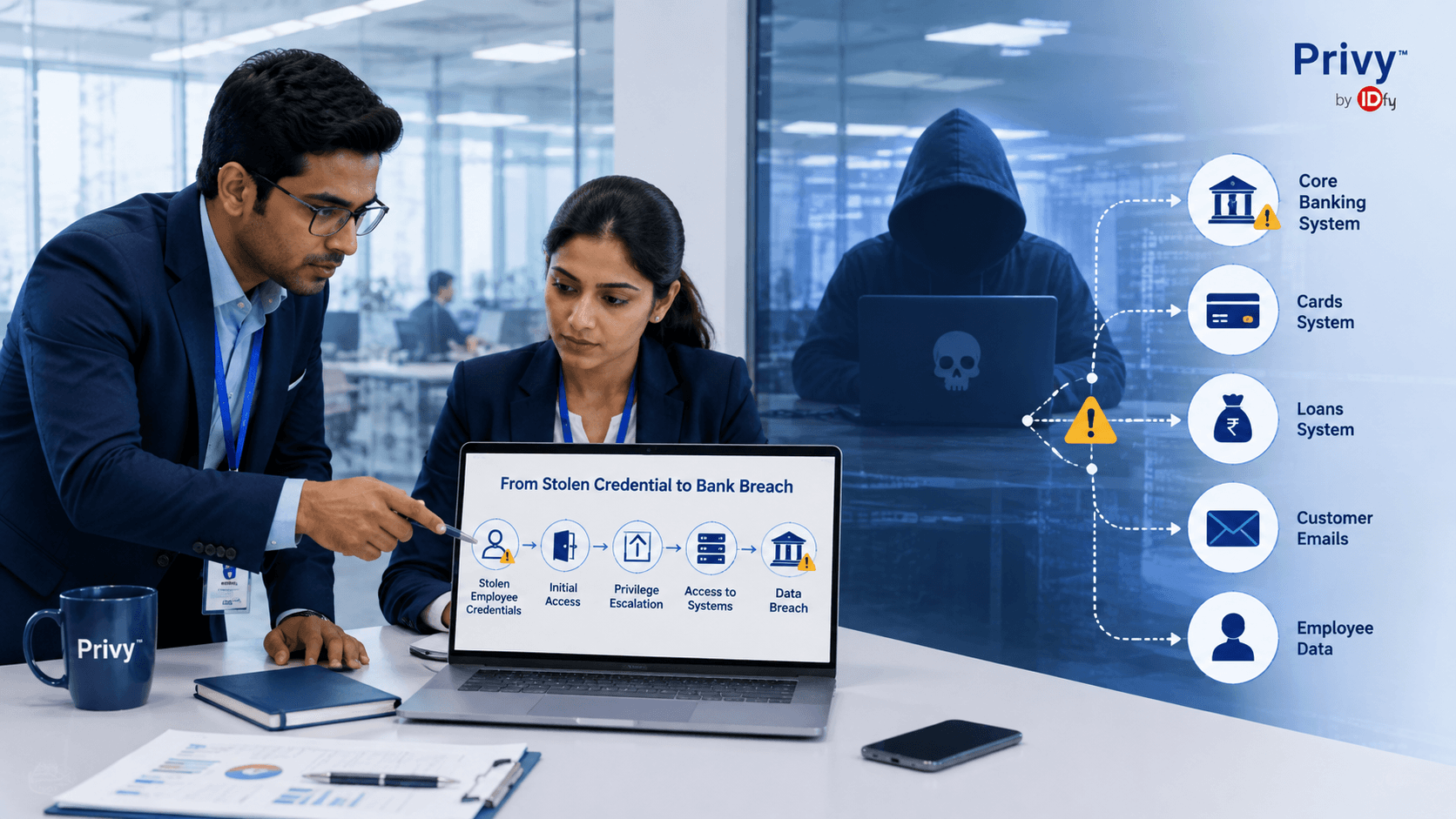
How stolen employee credentials, infostealer logs, and session hijacking can expose banking data and how Indian banks should respond under DPDP.