

What Is Privacy Incident Management? A Practical Guide to Incidents, Breaches, and Response
Date Published

Summary
Most privacy failures don’t begin as major breaches. They start as small incidents: a file shared incorrectly, unnecessary employee access, or a misconfigured system exposing personal data internally. Privacy incident management helps organizations detect, assess, contain, and respond to these events before they escalate into regulatory, financial, or reputational crises.
A strong incident management framework enables organizations to distinguish incidents from reportable breaches, respond consistently, maintain audit-ready documentation, and reduce regulatory risk.
Most organizations don’t realize they have a privacy problem when it starts. They realize it when it has already escalated.
A file gets shared with the wrong recipient. An employee downloads customer data they shouldn’t have accessed. A misconfigured system exposes personal information internally. These moments may never become public headlines, but they still create operational, legal, and reputational risk.
This is where privacy incident management becomes critical.
Privacy incident management helps organizations detect, assess, investigate, and respond to data-related events before they evolve into full-scale breaches. In today’s regulatory environment, especially as organizations strengthen compliance readiness under frameworks like the DPDP Act, managing incidents effectively is no longer optional.
Organizations focusing on broader privacy governance and operational readiness can also explore our guide on Privacy Maturity in India Under DPDPA.
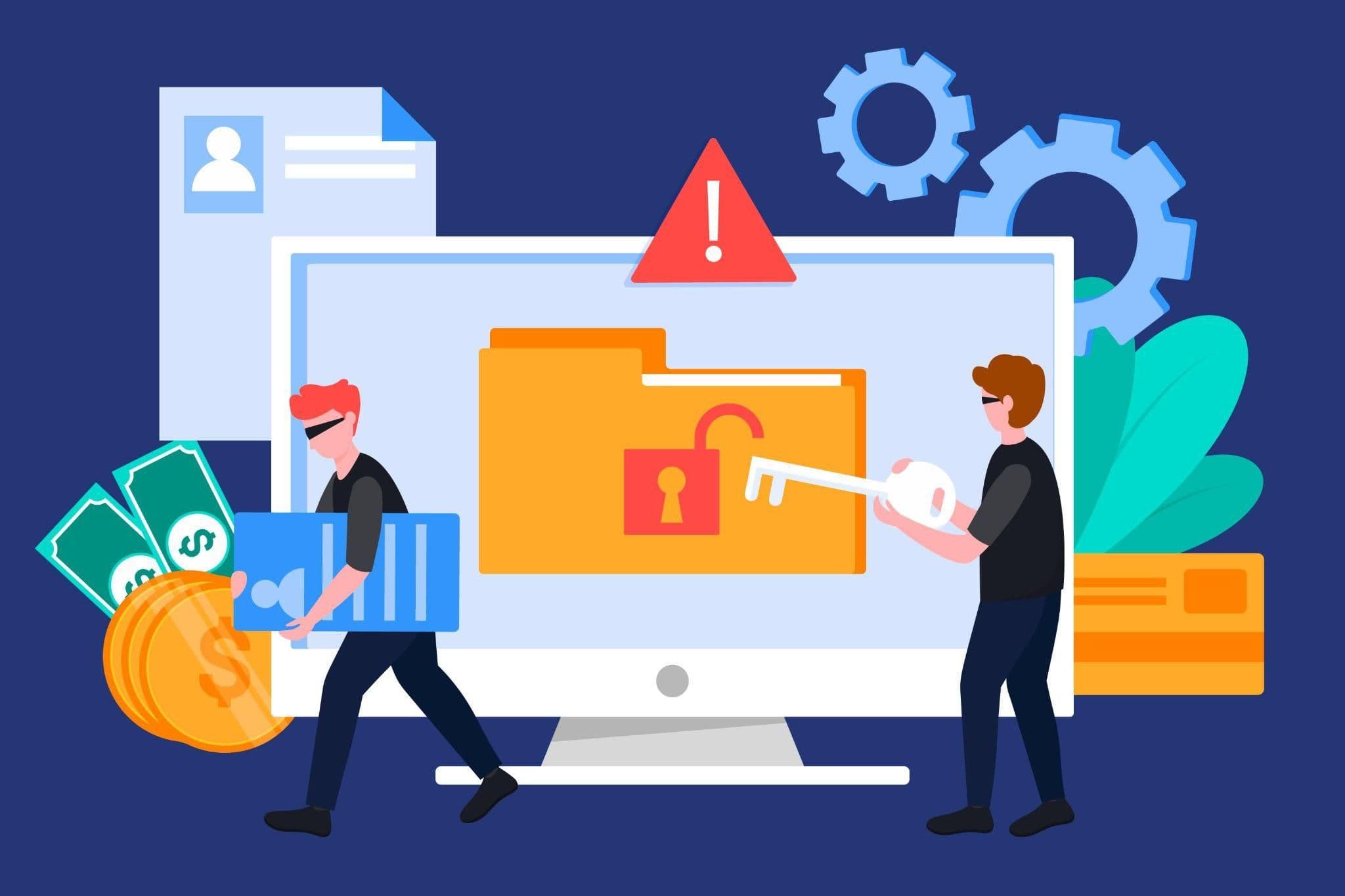
What Is Incident Management in the Context of Privacy?
At a high level, incident management refers to the process an organization follows to identify, respond to, investigate, and resolve unexpected events that disrupt normal operations or create risk. In the privacy context, incident management focuses specifically on events involving personal or sensitive data.
Privacy incident management includes the processes used to:
- Detect potential misuse, exposure, or loss of personal data
- Assess the event's severity and scope. Here’s a complete guide on data protection impact assessment.
- Contain the incident and prevent further harm
- Determine whether regulatory notification is required
- Document actions taken for accountability
Not every incident turns into a breach, but every breach starts as an incident. That distinction is crucial. Organizations strengthening governance processes alongside incident response may also benefit from understanding
Data Privacy Impact Assessments (DPIA) and how impact analysis supports defensible incident classification.
Why Privacy Incident Management Is Not the Same as Breach Response
One of the most common mistakes organizations make is treating incident management and breach response as the same process.
They are closely related, but they serve different purposes.
Privacy incident management is investigative and preventive. It begins early, often before organizations fully understand what happened.
Breach response, on the other hand, begins once an incident crosses legal or regulatory thresholds requiring formal action, disclosures, or notifications.
When organizations skip structured incident management and immediately jump into breach response, they often either:
- Overreact and trigger unnecessary escalations
- Underreact and fail to meet regulatory expectations
- Create inconsistent documentation
- Struggle to defend decisions during audits or investigations
A mature incident management process creates a defensible decision-making framework instead of relying on rushed judgment calls during stressful situations.
Incident vs Breach: Understanding the Difference
What Is a Privacy Incident?
A privacy incident is any event that could compromise the confidentiality, integrity, or availability of personal data.
Examples include:
- Unauthorized internal access to sensitive data
- Accidental disclosure to the wrong recipient
- Lost or stolen devices containing personal information
- Misconfigured systems exposing information internally
- Suspicious access behavior requiring investigation
Importantly, a privacy incident does not automatically mean data was accessed, exfiltrated, or misused.
What Is a Data Breach?
A data breach occurs when an incident results in confirmed unauthorized access, disclosure, exposure, or misuse of personal data and meets applicable legal or regulatory thresholds.
Breaches often involve:
- External attackers accessing sensitive information
- Confirmed exposure of personal data
- Data exfiltration or compromise
- Demonstrable risk of harm to affected individuals
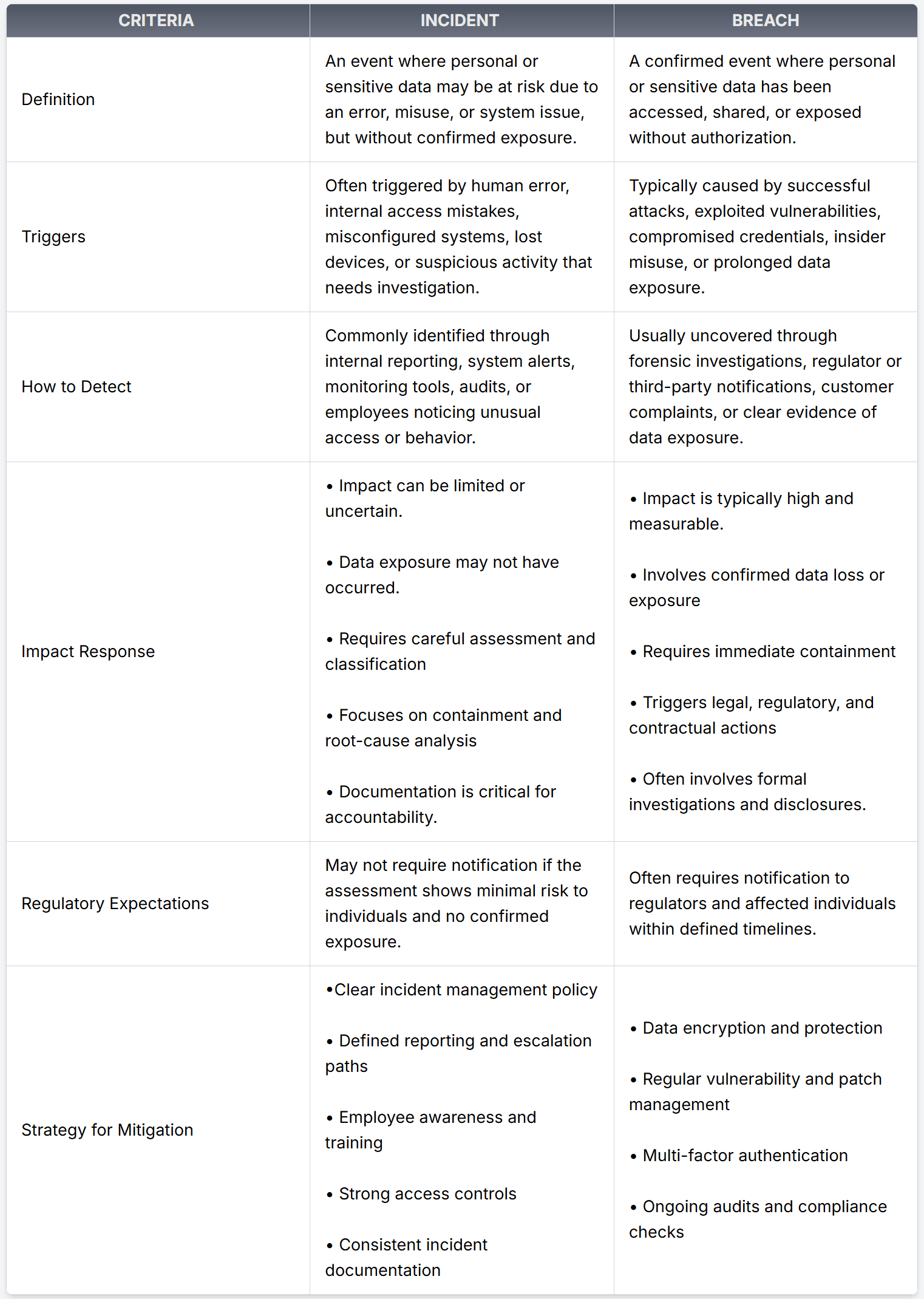
Why the Distinction Matters
Regulators increasingly expect organizations to carefully assess incidents before classifying them as reportable breaches.
Over-reporting creates unnecessary panic, operational strain, and regulatory scrutiny.
Under-reporting creates even greater risks, including compliance failures, penalties, and reputational damage.
This is why structured incident management processes are essential. They help organizations to:
- Investigate incidents consistently
- Document assessment decisions properly
- Demonstrate accountability during audits
- Build defensible governance practices
Strong incident management reduces both operational confusion and regulatory exposure.
Why Organizations Struggle With Privacy Incident Management
Despite increased awareness, many organizations still struggle to manage privacy incidents effectively. Common challenges include:
- Unclear definitions of what constitutes an incident
- No centralized intake or triage process
- Confusion between security incidents and privacy incidents
- Lack of documentation or audit trails
- Ad-hoc decision-making under pressure
Without a clear incident management policy, teams rely on judgment calls made in stressful situations, often with incomplete information.
What a Strong Incident Management Policy Should Include
An effective incident management policy provides clarity before incidents occur, not during them.
A mature policy typically defines:
- What constitutes a privacy incident
- Internal reporting and escalation workflows
- Roles and responsibilities across teams
- Criteria for determining reportable breaches
- Documentation and audit requirements
- Investigation and remediation procedures
- Communication and notification protocols
The goal is not bureaucracy. It is operational consistency.
When incidents occur, teams should already know:
- Who owns the response
- How incidents are classified
- When legal review is required
- How documentation should be maintained
- What actions must happen next
Organizations modernizing privacy governance frameworks may also find value in our guide on Data Privacy Management Platforms to better understand how centralized governance supports operational readiness.
Why Impact Assessment Is Critical During Incident Management
One of the most important stages in privacy incident management is impact assessment.
This is where organizations determine:
- What data was involved
- Whether personal data was actually accessed
- The sensitivity of the exposed information
- The number of individuals affected
- The likelihood of harm
- Whether regulatory obligations are triggered
This assessment directly influences whether an incident becomes a reportable breach.
Without structured impact assessment, organizations risk inconsistent classifications, delayed responses, and poor regulatory defensibility.
Why Speed and Structure Matter in Incident Management
Time matters in privacy incidents, but speed without structure creates risk. Rushing to label something a breach without proper assessment can cause unnecessary alarm. Delaying response can worsen impact and increase regulatory exposure.
A mature incident management process balances urgency with discipline, ensuring actions are timely, documented, and defensible. Most privacy incident failures don’t stem from a lack of intent; they stem from a lack of structure.
Organizations often have:
- Security incident playbooks, but no privacy-specific workflows
- Disconnected teams handling legal, IT, and compliance separately
- Manual tracking of incidents with no single source of truth
As a result, incident management becomes reactive, fragmented, and hard to audit. We have also done a deep dive into the top 7 data protection impact assessment tools that will give you better insights into incident management.
How Privy by IDfy Helps Organizations Manage Privacy Incidents Better
Privacy incident management is fundamentally a governance challenge, not just a technical one.
This is where Privy by IDfy helps organizations operationalize structured and defensible incident response workflows.
Privy enables organizations to:
- Centralize incident intake and tracking
- Standardize assessment workflows
- Align incidents with regulatory thresholds
- Maintain complete audit-ready documentation
- Improve coordination across legal, IT, compliance, and security teams
- Reduce fragmented and manual incident handling processes
By bringing consistency and visibility into incident workflows, Privy helps organizations respond confidently without scrambling during high-pressure situations.
Organizations strengthening broader compliance operations can also explore solutions such as the Consent Governance Platform (CGP) and Data Discovery & Classification to improve visibility into sensitive data and downstream incident exposure.
Privacy incident management is not about preparing for a single worst-case scenario. It is about building organizational resilience and operational discipline over time.
Conclusion
Understanding what incident management is, how incidents differ from breaches, and why a clear incident management policy matters is no longer optional.
Privacy incident management protects individuals, supports compliance, and safeguards organizational credibility. It ensures that incidents are assessed carefully, breaches are identified accurately, and responses are defensible.
In today’s regulatory and trust-driven environment, managing privacy incidents well isn’t just good practice; it’s a necessity.
If your organization is rethinking how it handles privacy incidents or if you’re unsure whether your current incident management process would hold up under scrutiny, we’d love to help. Reach out to us at shivani@idfy.com to learn how Privy can support structured, compliant, and confident privacy incident management.
FAQs
What is incident management in privacy operations?
Privacy incident management is the structured process organizations use to identify, assess, investigate, contain, and resolve incidents involving personal or sensitive data before they escalate into reportable breaches.
What is the difference between a privacy incident and a data breach?
A privacy incident is any event where personal data may be at risk. At the same time, a data breach involves confirmed unauthorized access, exposure, or misuse of personal data that may trigger legal or regulatory obligations.
Why is an incident management policy important?
An incident management policy ensures organizations respond consistently during high-pressure situations. It defines escalation paths, responsibilities, documentation requirements, and breach determination workflows.
What are the biggest challenges in privacy incident management?
Organizations commonly struggle with fragmented workflows, lack of centralized visibility, inconsistent documentation, and confusion between security incidents and privacy incidents.
How does Privy by IDfy support privacy incident management?
Privy helps organizations centralize incident tracking, standardize assessments, maintain audit-ready records, and operationalize privacy governance through structured workflows and continuous oversight.
.jpg&w=3840&q=75)
Learn what the DPDP non-compliance cost for Indian enterprises is, and what this data breach cost in India can lead to.
Learn what incident management under DPDP means and how Indian enterprises can handle incident response under DPDP.

Learn the top causes of privacy incidents in 2026 and how a strong incident management process, incident management life cycle, and privacy governance framework help organizations reduce risk, improve compliance, and respond effectively.