

Beyond Consent: Why Data Security Posture Management is the New Trust Infrastructure for Indian Businesses
Date Published

Before 2023, trust in the Indian digital ecosystem was a binary affair. You either clicked "I Agree" on a 40-page document written in legalese so dense it could have its own gravitational pull, or you didn't use the app. We called it consent; in reality, it was a hostage situation.
Fast forward to the Digital Personal Data Protection (DPDP) Act era, and the stakes have evolved from minor inconvenience to existential risk. However, the rub here is: most organizations are still treating privacy like a front-desk job. At the entry point its all good; consent is taken, while at the basement, the actual data is a chaotic heap of uncatalogued boxes.
If consent is the handshake at the door, Data Security Posture Management (DSPM) is knowing exactly what is happening in every room of the building, who is carrying what, and where the secret exits are. It is the shift from asking for permission to governing the privilege.
In this blog, we’re going beyond the checkbox. We’re looking at how to build a data governance framework that doesn't just satisfy a regulator but actually secures the business.
What is Data Security Posture Management (DSPM)?
In the old days of cybersecurity, we built moats (firewalls) and hired guards (antivirus). We assumed that if the perimeter was secure, the data inside was safe. However, in a world of cloud storage, remote work, and interconnected APIs, the perimeter has effectively dissolved.
Data Security Posture Management (DSPM) is a security segment that shifts the focus from the container to the content. Instead of just asking, 'Is the database locked?' DSPM asks:
- What is inside this database? (e.g., Is there PII like Aadhaar or PAN numbers?)
- Who can see it? (e.g., Does a former intern still have "Admin" access?)
- Where is it going? (e.g., Is this sensitive data being synced to an unencrypted backup?)
- Is it compliant? (e.g., Does our data residency match the DPDP Act mandates?)
Think of it like a smart home security system that doesn't just tell you the front door is locked but alerts you if you left the oven on, if there’s a water leak in the basement, or if a window in the attic, one you forgot existed, is wide open. Now let's understand how DSPM is executed in this new era of DPDP.
Data Discovery Tools: Finding the Needle in the Digital Haystack
Imagine you’re a librarian in a library where books are being added by the second, but they arrive through the windows and the vents and sometimes materialise out of thin air. Some are harmless fiction; others are the private diaries of your patrons. This is the modern enterprise data environment.
Standard security looks at the perimeter, the library's walls. Data discovery tools look at the books. In a DPDP-compliant world, you cannot protect what you don't know exists. Whether it’s shadow data sitting in a developer’s forgotten S3 bucket or a duplicate CSV file in a marketing folder, sensitive data discovery is the first step of hygiene.
For Indian enterprises, this isn't just about finding data; it’s about Personally Identifiable Information (PII) data discovery tools that understand the nuances of the Indian context, from Aadhaar numbers to regional language identifiers. Without automated enterprise data scanning, you aren't managing a database; you’re managing a liability.
Data Mapping Software: Visualizing the Data Life Cycle
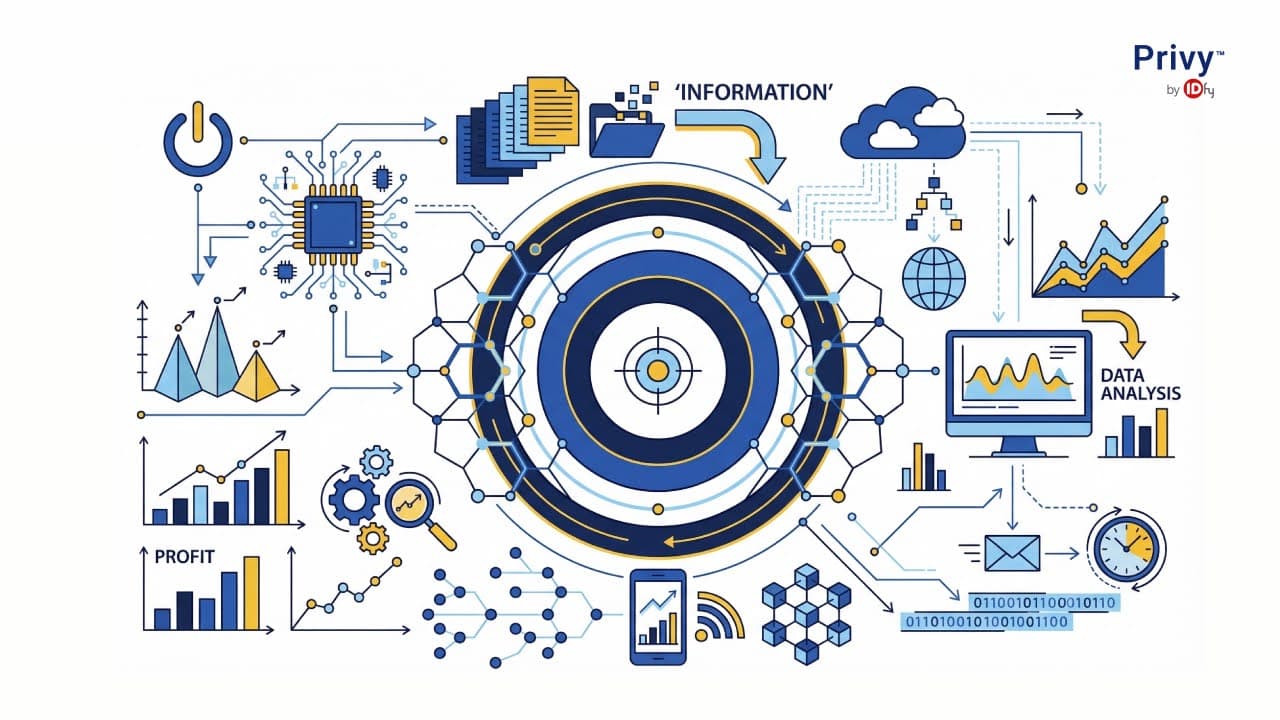
Once you’ve found the data, you need to know where it’s going. Think of data mapping as the GPS for your information. If a customer’s phone number is entered through a lead-gen form, where does it travel? Does it end up in a CRM? Is it shared with a third-party analytics vendor? Does it sit in a backup server in Singapore?
Data mapping software creates a visual and functional blueprint of these journeys. Under the DPDP Act, purpose limitation is a core tenet. If you took data for a home loan application but used it to sell insurance, the GPS shows a detour that could cost you a ₹250 crore fine. Mapping ensures that the data’s physical location matches its legal permission.
The Data Categorization Framework: Not All Data is Created Equal
In the world of logistics, you don't treat a crate of onions the same way you treat a shipment of glass vials. Yet, in many legacy systems, a user’s pizza preference is stored with the same level of security as their PAN card details.
A robust data categorization framework is the sorting hat of the enterprise. It uses data classification to tag information based on its sensitivity and regulatory weight. Is it public, internal, confidential, or restricted? Here is how data categorization works:
- Data Catalog: This is your centralized inventory, the source of truth that tells the Data Protection Officer (DPO) exactly what assets the company holds.
- Data Intelligence: This is the layer above the catalog. It’s the ability to not just see the data, but understand its risk profile, its age, and its relevance to the business.
Automating Data Governance
In a mid-sized Indian fintech, data moves at the speed of light. Relying on a manual personal data inventory updated once a quarter is like trying to monitor Mumbai traffic with a Polaroid camera. By the time the picture develops, the situation has changed entirely.
Modern data governance requires automation. It’s the difference between a security guard with a clipboard and a smart-sensor network. Automation ensures that as soon as a new data field is created, it is discovered, classified, and mapped. This is where the transition from "compliance as a project" to "compliance as a posture" happens.
If the tools mentioned above are the soldiers, Data Security Posture Management (DSPM) is the General. It doesn't just find and tag data; it continuously assesses the security of that data.
Is the sensitive PII (Personally Identifiable Information) encrypted? Is the access restricted to only those who need it? Is there an "exposure" because a database was accidentally made public? DSPM provides a "360-degree view" (a phrase we love, but here it actually applies) of your data risk. It bridges the gap between the Security team (who cares about breaches) and the Privacy team (who cares about compliance).
Going Beyond the "Consent Checkbox"
At Privy by IDfy, we’ve watched the market scramble to slap "Consent Managers" onto their websites like a fresh coat of paint on a crumbling house. We decided to build the house properly instead.
While others are focused on the "handshake" (consent), Privy is focused on the entire "relationship." We realized early on that for an Indian enterprise, whether you’re a high-growth startup or a legacy bank, the DPDP Act isn't just about asking for permission; it's about Data Security Posture Management (DSPM).
Privy isn't just a platform; it’s an intelligent layer. Our Inspect AI module acts as a privacy co-pilot. It doesn’t wait for you to tell it where the data is; it proactively scans your digital journeys, detects compliance gaps in real-time, and flags risks before they become breaches.
- For Small & Mid-scale Businesses: We offer "compliance in a box." You don't need a 50-person legal team. Our AI-driven automation handles the heavy lifting of data classification and mapping, integrating into your existing tech stack in days, not months.
- For Large Enterprises: We offer "trust at scale". When you’re dealing with millions of "Data Principals" (users) and thousands of data flows, you need a platform that doesn't buckle. Privy’s architecture is built to handle the volume of the Indian economy, ensuring that your personal data inventory is always audit-ready.
Most platforms stop at the "Yes/No" of consent. Privy goes further. Our Data Compass module provides built-in DSPM. It doesn't just record that a user said "Yes"; it ensures that the data they gave you stays within the boundaries of that "Yes." We automate the Record of Processing Activities (RoPA), manage third-party vendor risks, and provide a tamper-proof Consent Shield using SHA-256 hashing.
In the Indian context, where data is often fragmented across legacy systems and cloud infrastructure, Privy provides a unified command center. We speak 22 Indian languages, understand RBI and SEBI mandates, and are built on IDfy's 14+ year-expertise in identity and trust infrastructure.
Conclusion
The DPDP Act is often viewed as a hurdle, a set of "shalls" and "shall-nots" backed by scary penalties. But there is a different way to look at it. In a world where data breaches are the new normal, privacy is the ultimate brand differentiator.
By implementing a rigorous DSPM strategy, powered by data discovery tools, intelligent data mapping, and a robust data governance framework, you aren't just avoiding fines. You are building a "Trust Infrastructure." You are telling your customers: "Your data is not just an asset to us; it's a responsibility."
Consent is the beginning of the conversation. DSPM is how you keep your word.
Ready to move beyond the checkbox? Whether you are looking for PII data discovery tools or a complete data governance overhaul, we can help you navigate the DPDP maze with speed and intelligence.
Reach out to us at shivani@idfy.com for a demo of Privy or to discuss your data security posture.
Discover how data mapping simplifies privacy audits, improves data governance, enhances data classification, and builds a structured data catalog.
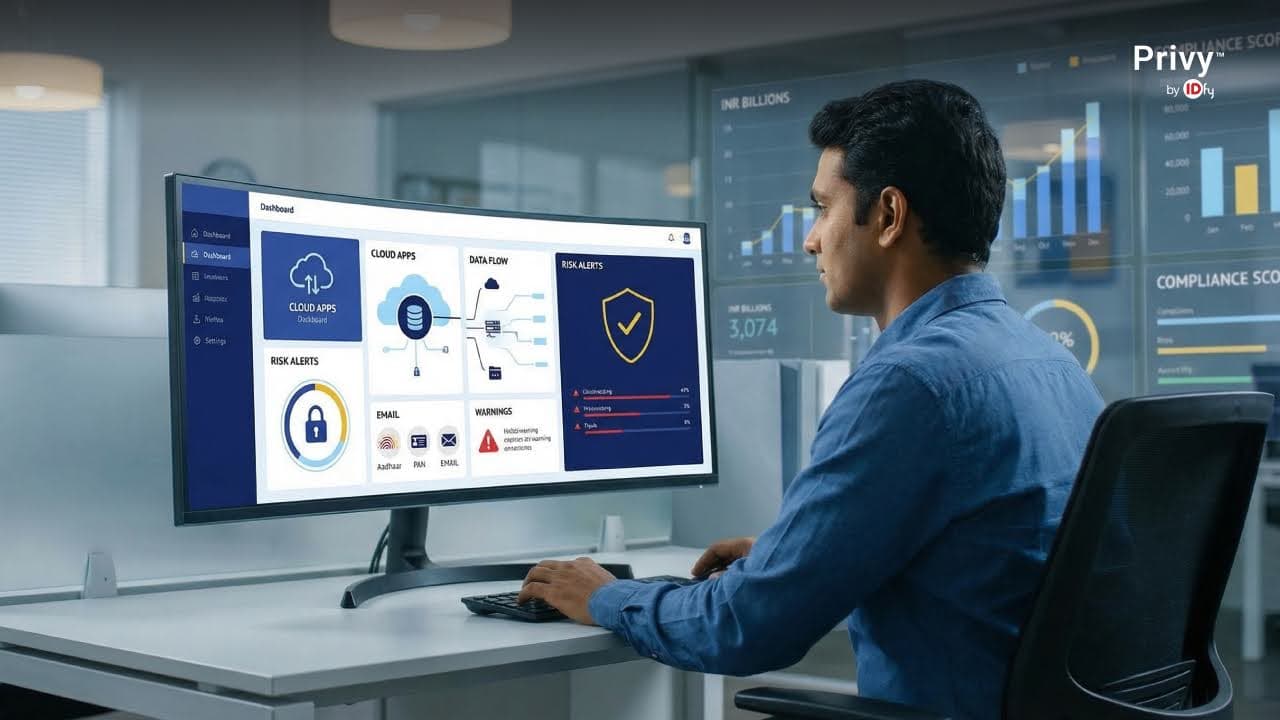
Master SaaS data discovery with our guide. Learn how data intelligence uncovers sensitive data, reduces shadow IT risks, and ensures DPDP compliance.

Discover how automated data discovery tools and machine learning are revolutionizing data classification and PII detection.