How SaaS Data Discovery Works Under DPDP Act: The Ultimate Guide to Data Intelligence
Date Published
Remember those high-stakes exams back in school? The ones where the teacher casually mentioned, "The syllabus has been updated," just two weeks before the finals?
Panic would ensue. You realized that studying your old notes was like trying to win a Formula 1 race on a bicycle. To ace the paper, you didn’t just need to study hard; you needed the right syllabus. You needed to know exactly which chapters were in, which were out, and where the "extra credit" questions were hiding.
In the world of modern enterprise, your SaaS ecosystem is that ever-changing syllabus. Every time an employee signs up for a "free" productivity tool with their work email, a new chapter is added to your exam. If you don't know what’s in that syllabus, you aren’t just failing the test; you’re leaving the school gates wide open for a security breach.
This is where data discovery steps in. It’s the process of mapping out your entire SaaS "curriculum" to prepare, protect, and perform.
What is SaaS Data Discovery? (Identifying Your Exam Paper)
At its core, SaaS discovery is the automated process of identifying every single cloud application being used within your organization. Think of it as a continuous scan of your study hall. It doesn't just look at the textbooks you bought (sanctioned apps); it finds the handwritten cheat sheets and unauthorized photocopies (Shadow IT) hiding in the back rows.
Without a robust discovery mechanism, you’re flying blind. You might think you’re only using Slack and Salesforce, but discovery often reveals a syllabus sprawl of 3x more apps than IT actually knows about.
The Mechanics of Mastery: How Data Discovery Actually Works
How does a system find things it wasn't told existed? It’s less like a manual search and more like Data Intelligence in action. Here’s the breakdown of the three most effective discovery techniques:
A. Financial Data Analysis (Following the Paper Trail)
The most honest record of what’s happening in a company is the credit card statement. Discovery engines ingest financial data, expense reports, AP invoices, and accounting records to spot "Micro-SaaS" subscriptions. If someone paid $10 for a PDF converter, the system flags it as suspicious.
B. Identity Provider (IdP) & SSO Integration
This is like checking the school’s attendance register. By connecting to tools like Okta, Azure AD, or Google Workspace, discovery tools see exactly who is logging into what. It’s great for sanctioned apps, but the real magic happens when it spots OAuth logins, those Sign in with Google moments that bypass traditional security.
C. Browser Extensions and Endpoint Agents
If financial data is the receipt and SSO is the register, browser extensions are the classroom cameras. They capture real-time usage, identifying apps that don’t require a payment or a formal login, ensuring no Shadow IT lingers in the dark.
Elevating the Game: From Discovery to Data Intelligence
Finding the app is just Level 1. Level 2 is understanding the Data Intelligence behind it.
Data intelligence isn't just about knowing an app exists; it’s about understanding the context. Who is using it? What kind of permissions does it have? Is it talking to your core database? Its like the difference between knowing a chapter is in the syllabus and actually understanding the core concepts within that chapter.
When you apply intelligence to discovery, you move from "we have 500 apps" to "we have 5 apps that have 'Delete' access to our customer database." That is a massive shift in power.
Hunting for the 'Hidden Chapters': Identifying Sensitive Information
The most dangerous part of an unmapped syllabus is the sensitive information tucked away in obscure corners.
When employees use unsanctioned SaaS tools, they often upload "test data" that contains Personally Identifiable Information (PII), SPI (Sensitive Personal Information), or trade secrets. SaaS data discovery tools act like a high-powered highlighter, scanning through these apps to find:
- Unencrypted Aadhaar or PAN numbers.
- Customer email lists are sitting in a free marketing tool.
- Proprietary code snippets in a random beautifier app.
By classifying this data based on sensitivity, you aren't just managing software; you’re protecting the crown jewels of your business.
Why a Dynamic Syllabus is Better Than a Static One
In the old days, IT did a software audit once a year. That’s like getting your exam syllabus on the day of graduation, completely useless.
The SaaS world moves too fast for static lists. New tools emerge every day, especially with the AI boom. A dynamic SaaS syllabus, one that updates in real-time through continuous discovery, ensures that:
- Security stays updated: You can't protect what you don't see.
- Costs are optimized: Why pay for 500 Zoom licenses when discovery shows 200 people are using Google Meet?
- Compliance is constant: With regulations like the DPDP Act, being mostly compliant is just a fancy way of saying liable for a ₹250Cr fine. We have also done a detailed blog on how DPDP compliance software is helping in data mapping and data audits.
The DPDP Grading System: Why Data Discovery is Your Regulatory Hall Pass
If SaaS discovery is your syllabus, the Digital Personal Data Protection (DPDP) Act is the final board exam, and the examiners are notoriously strict. In the pre-DPDP era, losing track of a few spreadsheets in a random cloud storage app was a technical debt issue. Post-DPDP, it’s a legal liability that can cost your organization up to ₹250 Crores per instance of a data breach. Here is why data discovery is the literal backbone of DPDP compliance:
1. The Right to Erasure (The Ultimate Delete Key)
Under the DPDP Act, a "Data Principal" (the user) has the right to ask you to delete their data. If your data is sitting in a "Shadow SaaS" tool, perhaps a project management app a team lead signed up for without telling IT, you can’t delete what you can’t find. Data discovery ensures your Delete command actually reaches every corner of your ecosystem.
2. Accuracy and Completeness (No Old Notes Allowed)
The Act mandates that personal data must be accurate and updated. If you have zombie SaaS apps holding outdated versions of customer profiles, you are technically in violation. Discovery identifies these redundant silos so you can consolidate your single source of truth.
3. The Duty to Report Breaches
DPDP requires companies to report data breaches to the Board and affected individuals. You cannot report a breach in an app you didn't know you were using. By maintaining a real-time inventory of where sensitive information lives, you reduce the Mean Time to Detect (MTTD) a leak, potentially saving your reputation and your bank account.
4. Consent Managers and Data Flow
DPDP introduces Consent Managers. To play nice with them, you need to know exactly which SaaS apps are processing data and for what purpose. Data intelligence allows you to map these flows, ensuring that if a user withdraws consent for marketing, their data is pulled from the third-party email tool immediately. We have also done a detailed analysis of the top 5 consent managers in India.
Navigating the DPDP Era
With the Digital Personal Data Protection (DPDP) Act becoming the law of the land, the stakes for SaaS discovery have shifted from good to have to a legal necessity.
At Privy by IDfy, we see this through a unique lens. Discovery isn't just a security exercise; it’s the foundation of Consent Governance. If you don't know where your customer data is residing because it’s hidden in a Shadow SaaS app, you cannot honor a right to erasure or a withdrawal of consent.
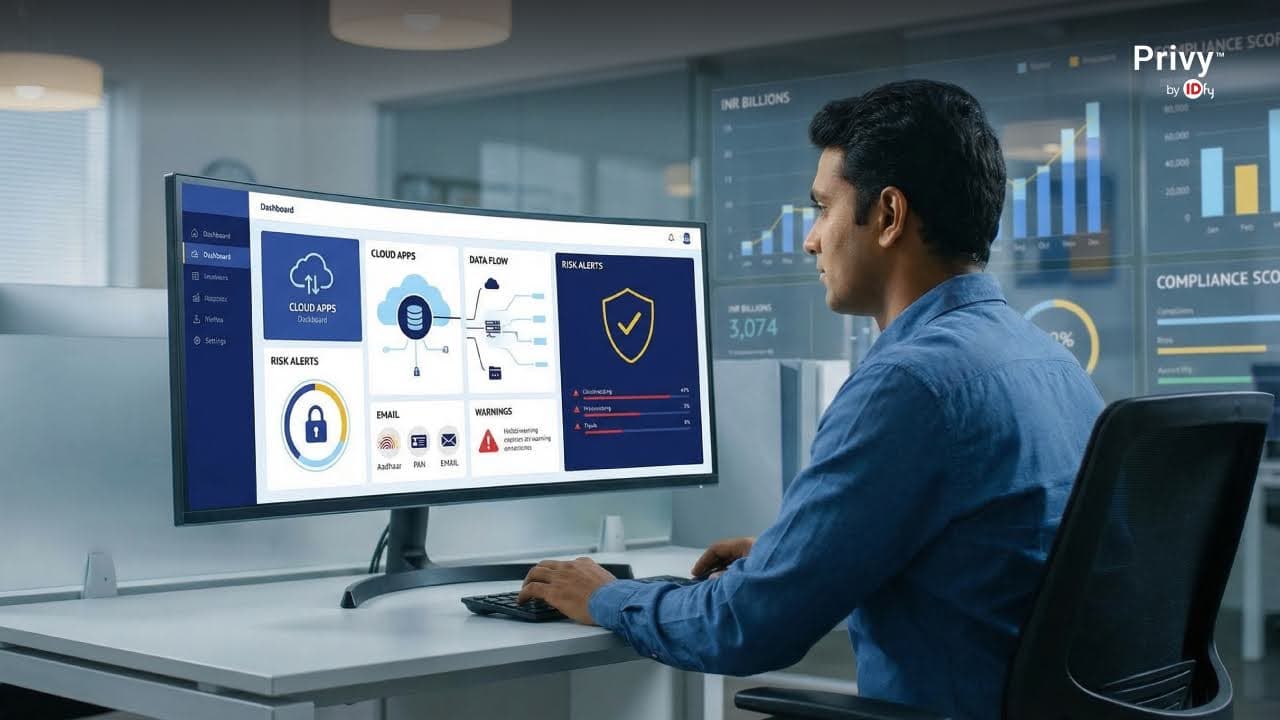
Our philosophy at Privy is simple: privacy cannot exist without visibility. We help enterprises build a Privacy Control Tower. Through our Data Compass module, we don't just find the apps; we map the personal data flows across your entire ecosystem. We ensure that every piece of sensitive information is accounted for, and every Data Principal has their rights protected. It’s about turning that chaotic, sprawling syllabus into a streamlined, high-scoring study guide.
Final Marks: Are You Ready for the Test?
Preparing for the "SaaS Exam" doesn't have to be a nightmare. When you embrace automated data discovery and layer it with deep data intelligence, you stop reacting to risks and start mastering your environment.
You wouldn't walk into a final exam without checking the syllabus first. Don't let your enterprise walk into the future without knowing exactly what’s in its SaaS stack.
Need help aligning your SaaS syllabus with the new DPDP norms? Navigating the complexities of data privacy doesn't have to be a solo journey. Whether you’re worried about Shadow IT or need to operationalize consent, we’ve got the experts to guide you. Reach out to us at shivani@idfy.com for a deep dive into your DPDP concerns. Let’s make sure you don't just pass the compliance test, you ace it.