

Best OneTrust Alternatives For DPDP Compliance
Author
aishwarya
Date Published
.png&w=3840&q=75)
OneTrust is a strong platform. It is also, structurally, the wrong starting point for India's DPDP Act, and that gap doesn't show up until an enterprise is deep into implementation. This isn't a feature checklist dressed up as an opinion. It's a pillar-by-pillar look at where a GDPR-first architecture creates real gaps for an Indian data fiduciary, and what a DPDP-native platform does differently at each layer.
OneTrust was built in 2018 for GDPR, years before DPDP existed as a law. Most compliance management software on the market today shares that same origin story: built for Europe first, adapted for India second. That adaptation shows up in specific, checkable places, not in a slogan.
Why This Is a GRC Decision, Not a Consent Decision
The mistake most evaluations make is treating this as a consent banner purchase. DPDP compliance is closer to a GRC software decision than a point-tool purchase: it touches data discovery, consent, risk management, breach response, and audit evidence, all at once, across every system that touches personal data.
That reframing matters because it changes what "DPDP compliant" should even mean. A platform can handle consent reasonably well and still leave an enterprise exposed on data discovery, vendor risk, or breach notification, the three areas where DPDP's specific mechanics diverge furthest from GDPR.
Company Snapshot: What You're Actually Signing Up For
.png&w=3840&q=75)
Pillar One: Consent Lifecycle Management
Consent is the part every vendor gets asked about first, and the part where the GDPR-vs-DPDP gap is easiest to demonstrate. GDPR's consent model runs on six lawful bases, of which consent is only one. DPDP is built around consent and a narrower set of legitimate uses, with its own Rules on how a consent artefact has to be structured: purpose-bound, immutable, and versioned.
A platform retrofitting DPDP support onto a GDPR consent engine tends to treat this as a configuration change. A DPDP-native platform builds it in as the default. The same gap shows up in cookie consent management specifically: cookie banners that satisfy GDPR's IAB TCF framework don't automatically satisfy DPDP's own consent requirements, since the underlying legal basis for tracking is different.
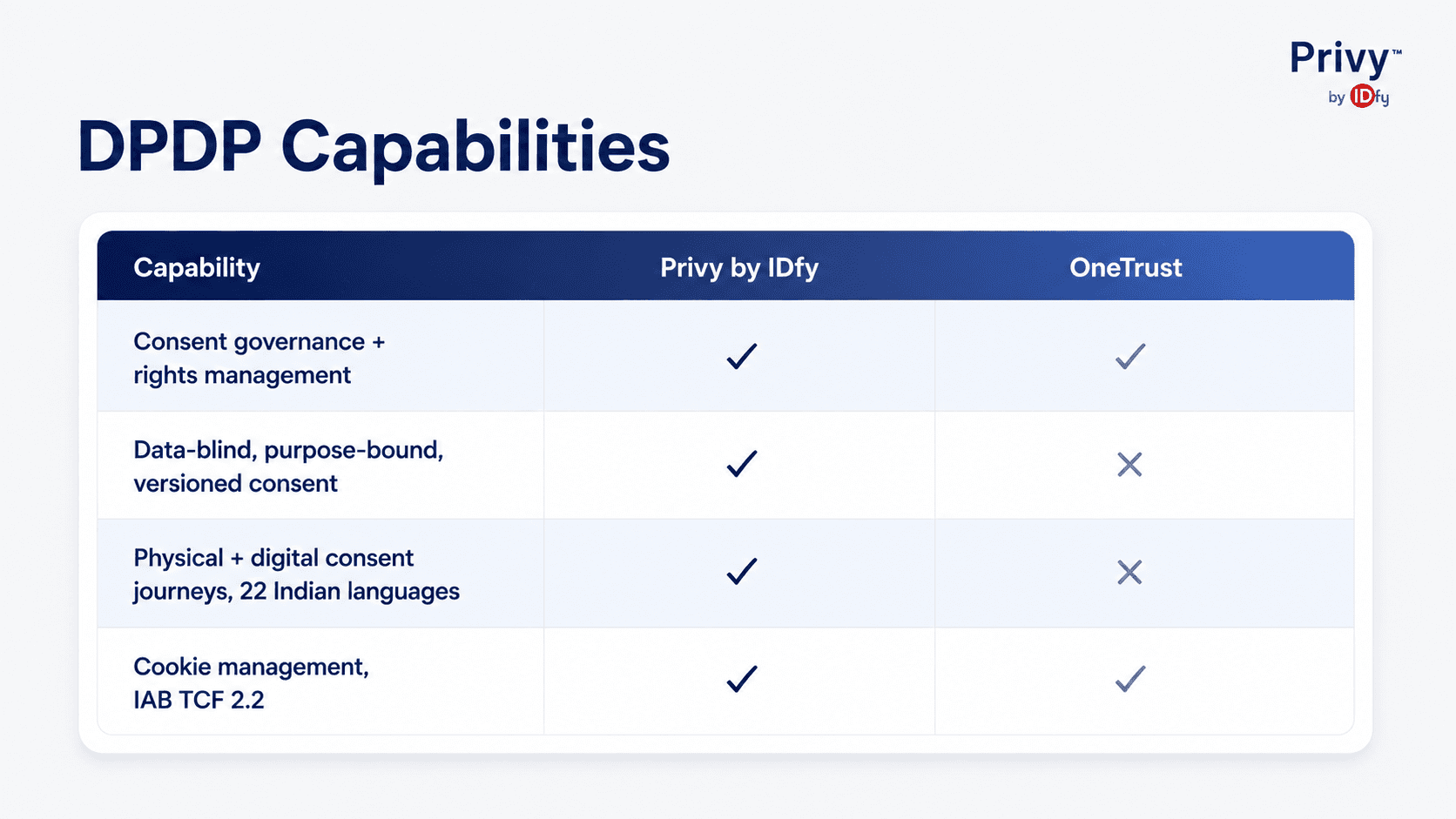
The consent governance and cookie manager modules cover this pillar end to end, including the offline and assisted consent journeys that a purely digital-first platform tends to treat as an edge case rather than a core requirement.
Pillar Two: Continuous Compliance and Risk Management
This is where "consent-only" framing falls apart fastest. DPDP compliance requires privacy impact assessments, a live record of processing activities, breach response within statutory windows, and ongoing oversight of every third party that touches personal data. That last piece, vendor and processor governance, is effectively its own category of vendor risk management software, and it's worth evaluating separately from the consent question entirely.
Third-party risk management under DPDP means tracking BPOs, cloud vendors, collection agencies, and credit bureaus against their actual data-processing agreement terms, not just maintaining a vendor list. Most third-party risk management software built for a general enterprise GRC use case treats this as a contract-tracking exercise. A DPDP-native platform ties it directly to the specific data flows DPDP regulates.
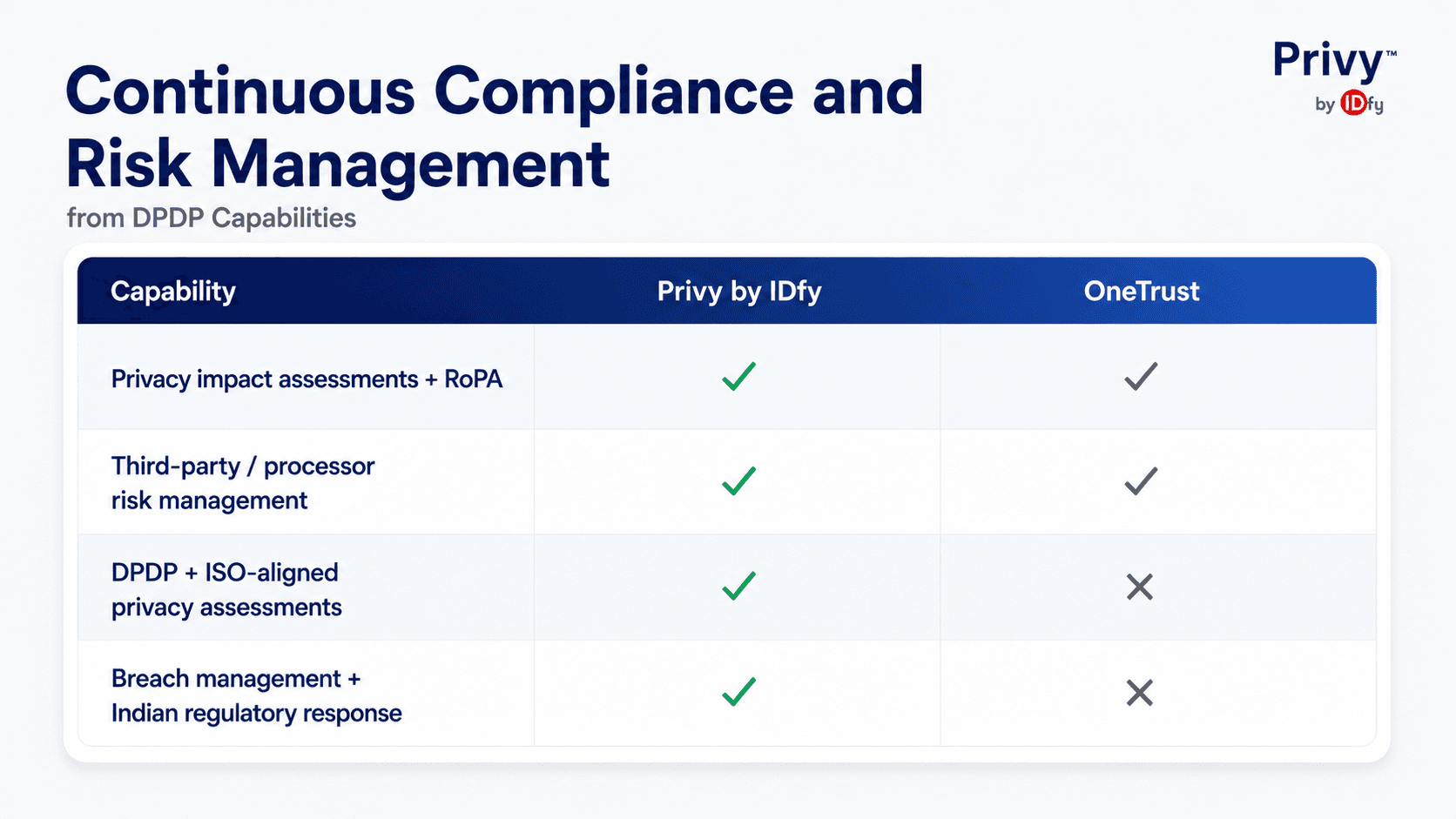
Breach response is the sharpest example. GDPR gives 72 hours to notify a supervisory authority. DPDP's Rule 7 sets its own timelines for notifying the Data Protection Board and affected data principals, aligned to India's regulatory structure rather than Europe's. A workflow built for the GDPR clock needs to be rebuilt for the DPDP one, not just relabeled.
Pillar Three: Personal Data Discovery and Governance
This is the pillar most likely to get underestimated during evaluation, and the one with the widest gap between GDPR-first and DPDP-native platforms. Data governance software built for a European data estate is tuned to recognise passport numbers, national insurance numbers, and EU-format identifiers. It was never built to recognise Aadhaar, PAN, Voter ID, or driving licence numbers, none of which have a GDPR equivalent.
Personal Data Discovery & Governance, Privy's discovery and classification engine, recognises these formats natively, including inside scanned and unstructured documents, using object-pattern classification rather than regex matching alone. Regex-based approaches, common in platforms extended after the fact for Indian PII, tend to miss format variations and require significantly more compute to run at enterprise scale.
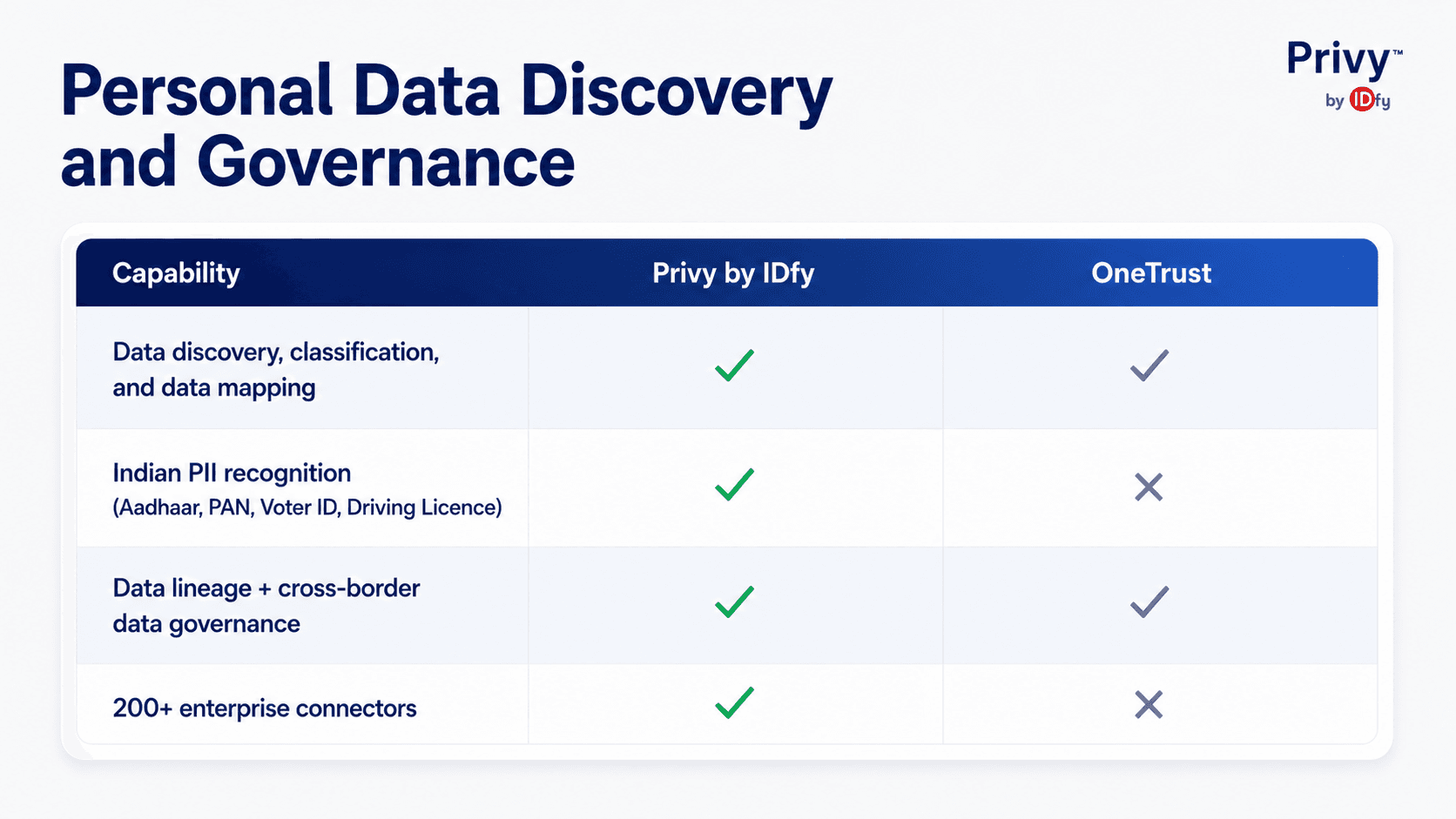
This is also where cross-border governance gets complicated for Indian enterprises specifically. RBI's data localisation rules for payment data sit alongside DPDP's own cross-border transfer regime, and a bank or NBFC needs both mapped against actual data flows, not just the more permissive one. Privy's work with banks and NBFCs covers exactly this overlap.
The AI Layer
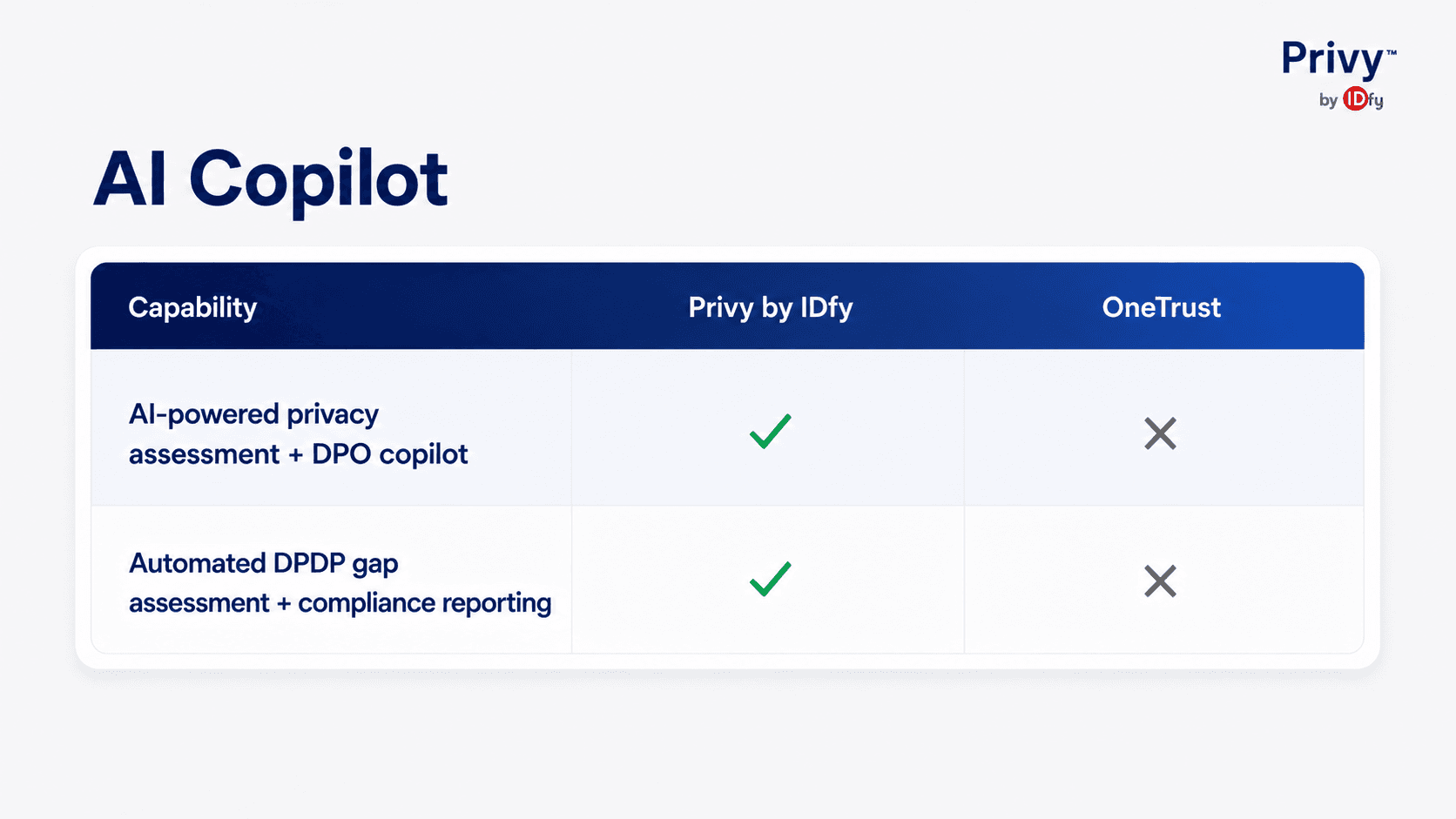
Every major platform is adding an AI layer to its compliance stack, but AI governance software is only as useful as the data model underneath it. InspectAI, Privy's compliance copilot, scans consent, data discovery, and third-party risk together, because DPDP gap detection depends on cross-referencing all three, not summarising one. An AI layer bolted onto a GDPR-first platform inherits that platform's blind spots on Indian PII and India-specific rules; it can't flag a gap the underlying data model was never built to see.
Implementation and Enterprise Readiness
The features matter less than who actually implements them. OneTrust's India delivery runs primarily through a systems integrator and partner ecosystem. Privy delivers directly through India-based product, technology, and legal teams, the same teams that built the platform.
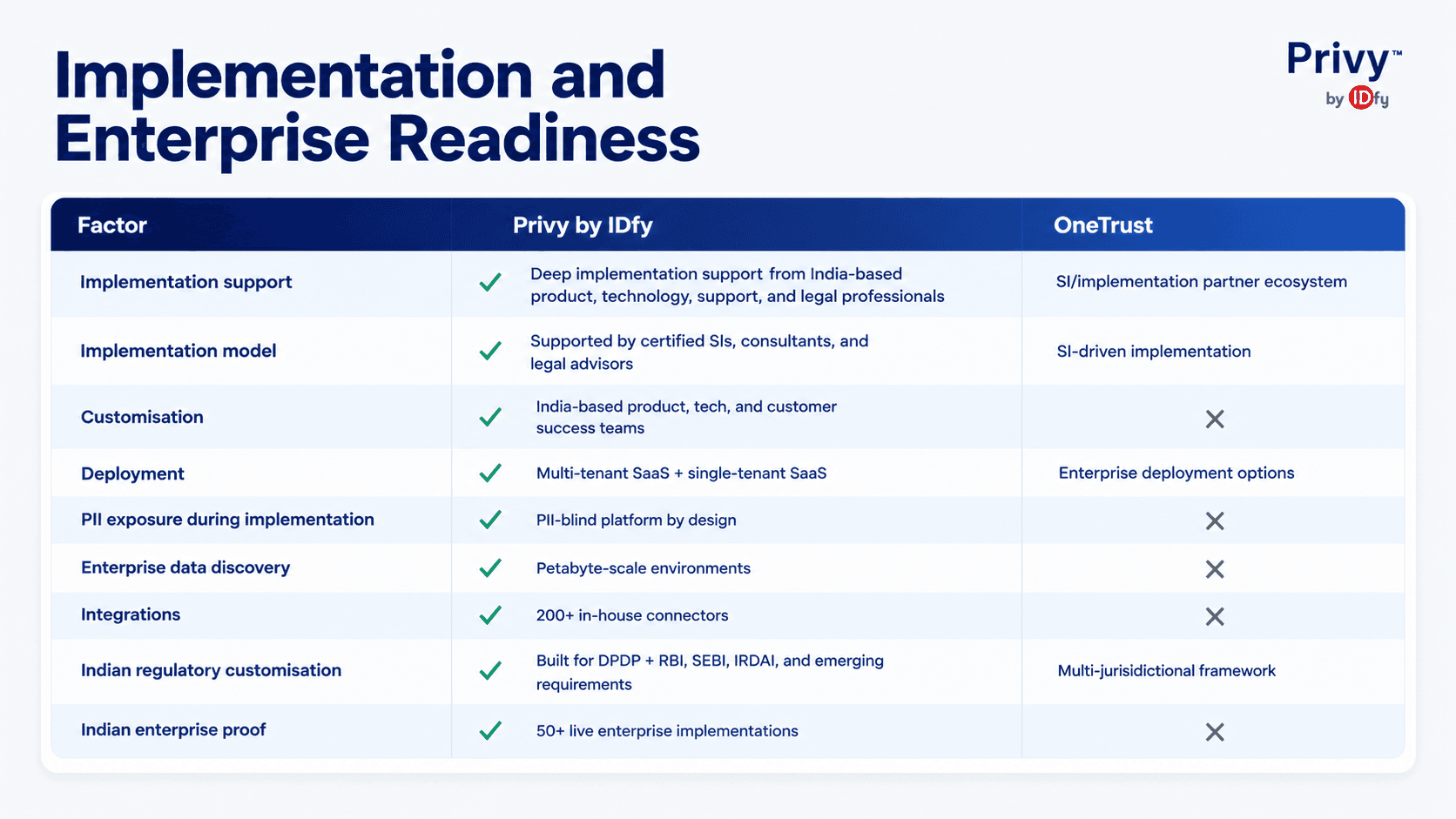
PII-blind design is worth pausing on. It means the platform itself never directly processes or stores the sensitive PII it's discovering and classifying, which simplifies InfoSec review considerably compared to a platform where the compliance tool becomes a new PII exposure point in its own right.
What You're Actually Buying, Beyond the Feature List
Every vendor comparison eventually gets reduced to a checkbox grid. What a CXO is actually signing up for looks more like this:
- Stress-free audits. Audit evidence, activity trails, and compliance reports available on demand, not assembled under deadline pressure.
- Confidence during a breach. Identifying affected data principals, understanding the data involved, and tracking regulatory timelines without a war room.
- Fewer privacy blind spots. Knowing where personal data exists, how it moves, and who it's shared with, across systems that were never designed to be visible to a compliance team.
- Less compliance firefighting. Moving from periodic assessments to continuous privacy operations.
- Leadership confidence. A current view of privacy posture, risk, and open gaps, not a snapshot from the last audit cycle.
- Readiness for regulatory change. DPDP's rules will keep evolving; a platform built for the Act adapts with it more easily than one built for a different one.
The long-term outcome, if this works the way it should, is privacy becoming an operating capability rather than another compliance project that resets every audit cycle.
The Five Questions to Ask Before You Sign
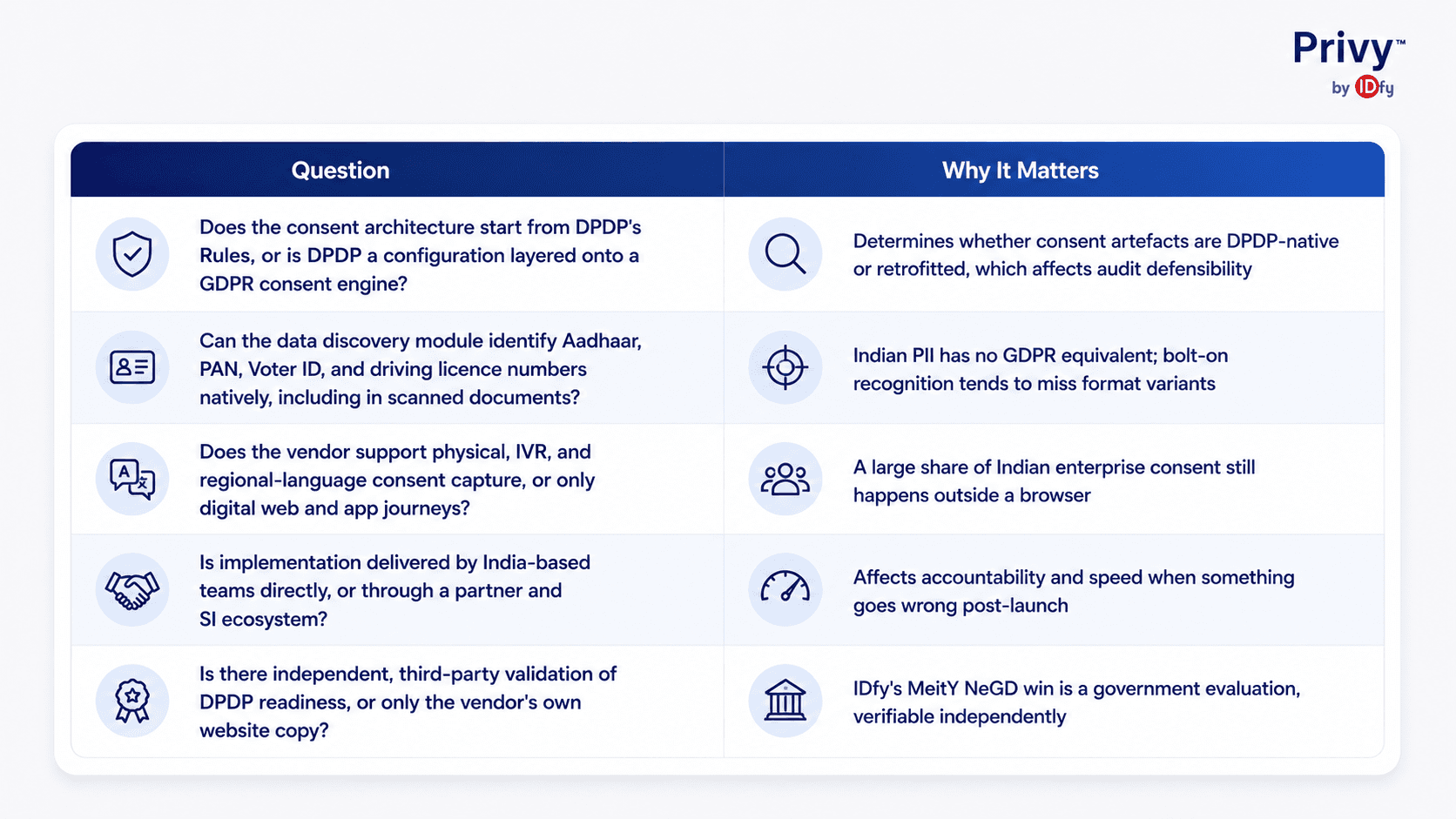
Conclusion
Choosing a DPDP compliance platform is not about finding the longest feature list. It is about whether the platform is built around India's regulatory and operational realities. The key question is simple: Can the platform give you a current, connected, and defensible view of privacy risk across your enterprise? That means DPDP-native consent, Indian PII discovery, processor risk, breach management, and India-specific implementation, not just a global compliance framework with DPDP layered on.
Privy by IDfy is built with this India-first approach across consent, data discovery, risk management, AI-powered compliance, and enterprise implementation. For organisations evaluating OneTrust, the real question is not “Does it support DPDP?” but “How much of DPDP was designed into the platform from the beginning?”To learn more, write to shivani@idfy.com or book a demo
FAQ’s
Is OneTrust DPDP compliant?
OneTrust can be configured to address several DPDP requirements, but its underlying consent and data architecture was built for GDPR in 2018. India-specific requirements, consent artefact rules, Indian PII recognition, and regulatory overlap with RBI, SEBI, and IRDAI are not native to that design.
What's the single biggest gap for an Indian enterprise using OneTrust?
Indian PII recognition. Aadhaar, PAN, Voter ID, and driving licence formats have no GDPR equivalent, so discovery and classification tuned for European identifiers typically needs significant extension to work reliably on Indian document formats, especially scanned and unstructured data.
Is DPDP compliance software the same as GRC software?
Related but not identical. DPDP compliance touches the same ground as general GRC software, risk, controls, evidence, but with India-specific requirements (consent artefacts, Indian PII, RBI/SEBI/IRDAI overlap) that a generic GRC platform or a GDPR-first privacy platform doesn't cover by default.
What should a vendor risk management evaluation look for under DPDP specifically? Whether the platform ties vendor and processor tracking directly to the personal data flows DPDP regulates, not just a generic contract and SLA tracker. DPDP requires visibility into what data a processor handles and how, not only that a contract exists.
Does OneTrust have a direct presence in India?
OneTrust has an office in Bengaluru. Implementation and support for Indian enterprises commonly runs through a partner and systems integrator ecosystem rather than direct India-based product and support teams.
Is there independent validation of DPDP readiness for either platform?
IDfy, the company behind Privy, won MeitY NeGD's Code for Consent Challenge, a government evaluation of DPDP technical, functional, and legal readiness, verifiable independently rather than taken from vendor marketing.

DPDP readiness is no longer a legal exercise it’s board's responsibility. Governance, maturity, roadmap, full-stack privacy execution. Privy by IDfy
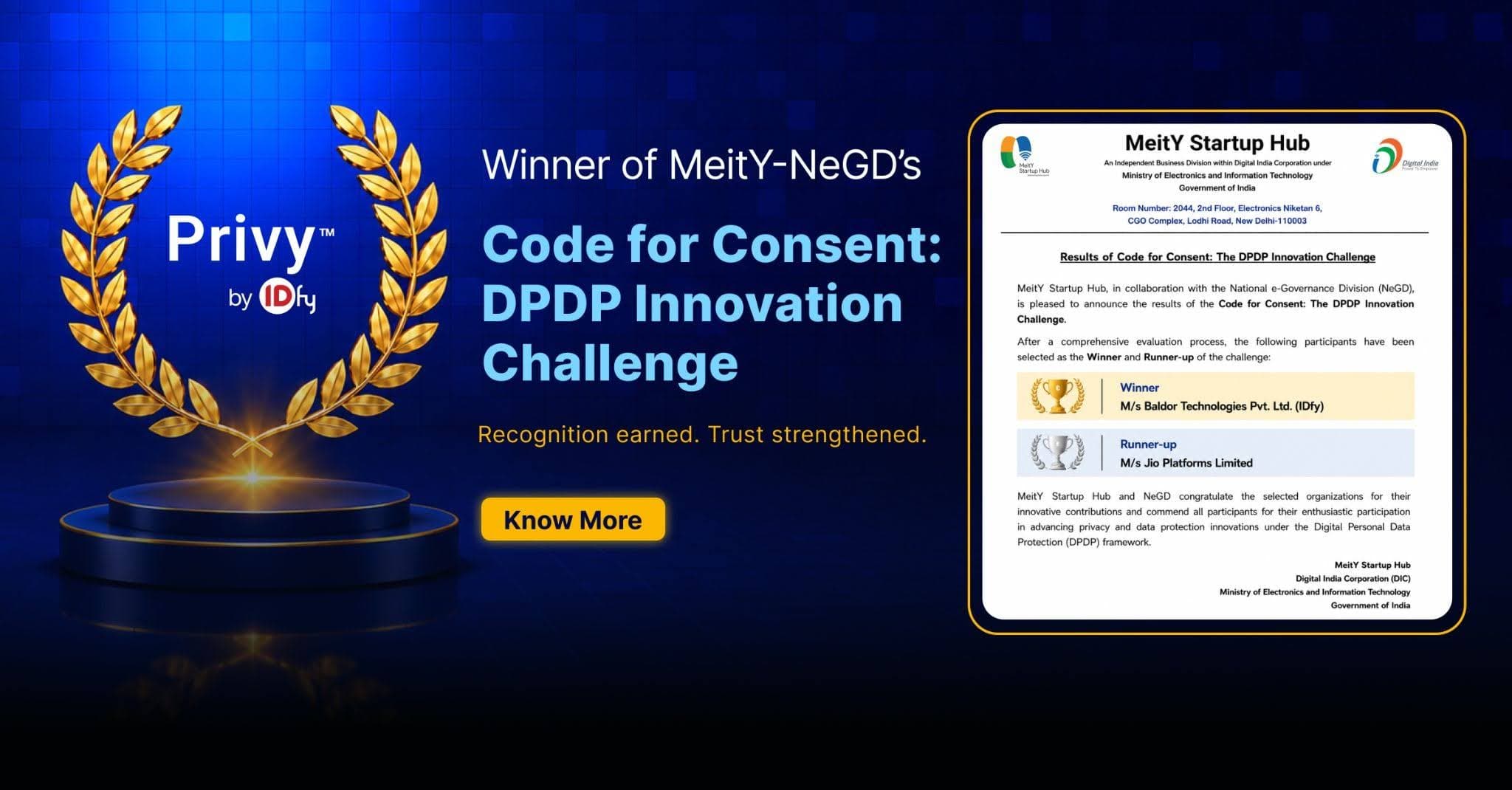
Privy by IDfy was ranked #1 in MeitY's DPDP Innovation Challenge. What that mean for India's most validated full-stack DPDPA compliance platform?
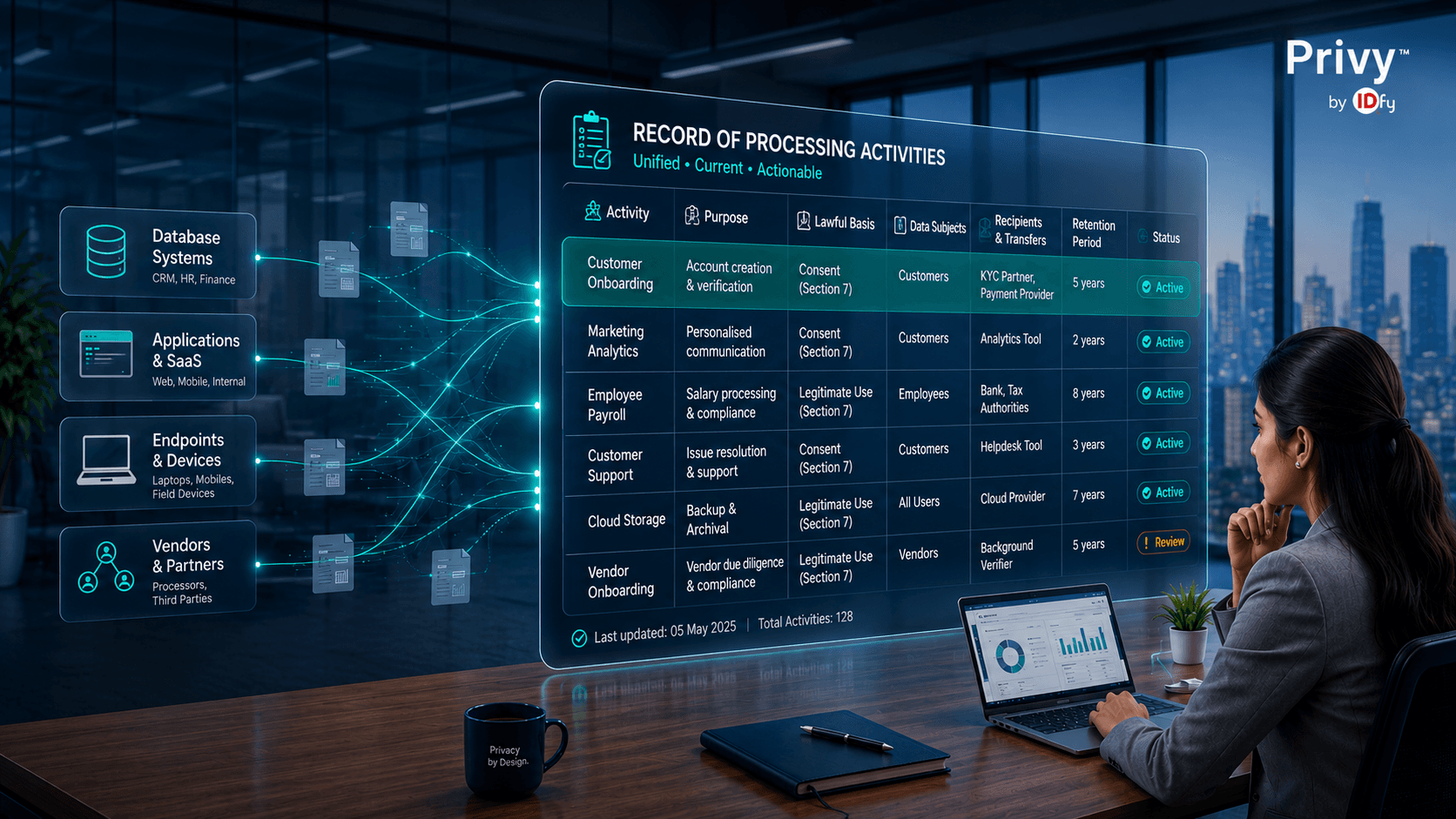
ROPA is not named in India's DPDP Act, but you cannot comply without one. What a record of processing activities must capture, and how to build it.