

What Is DSPM? Why It’s Critical for DPDP Compliance in 2026
Date Published
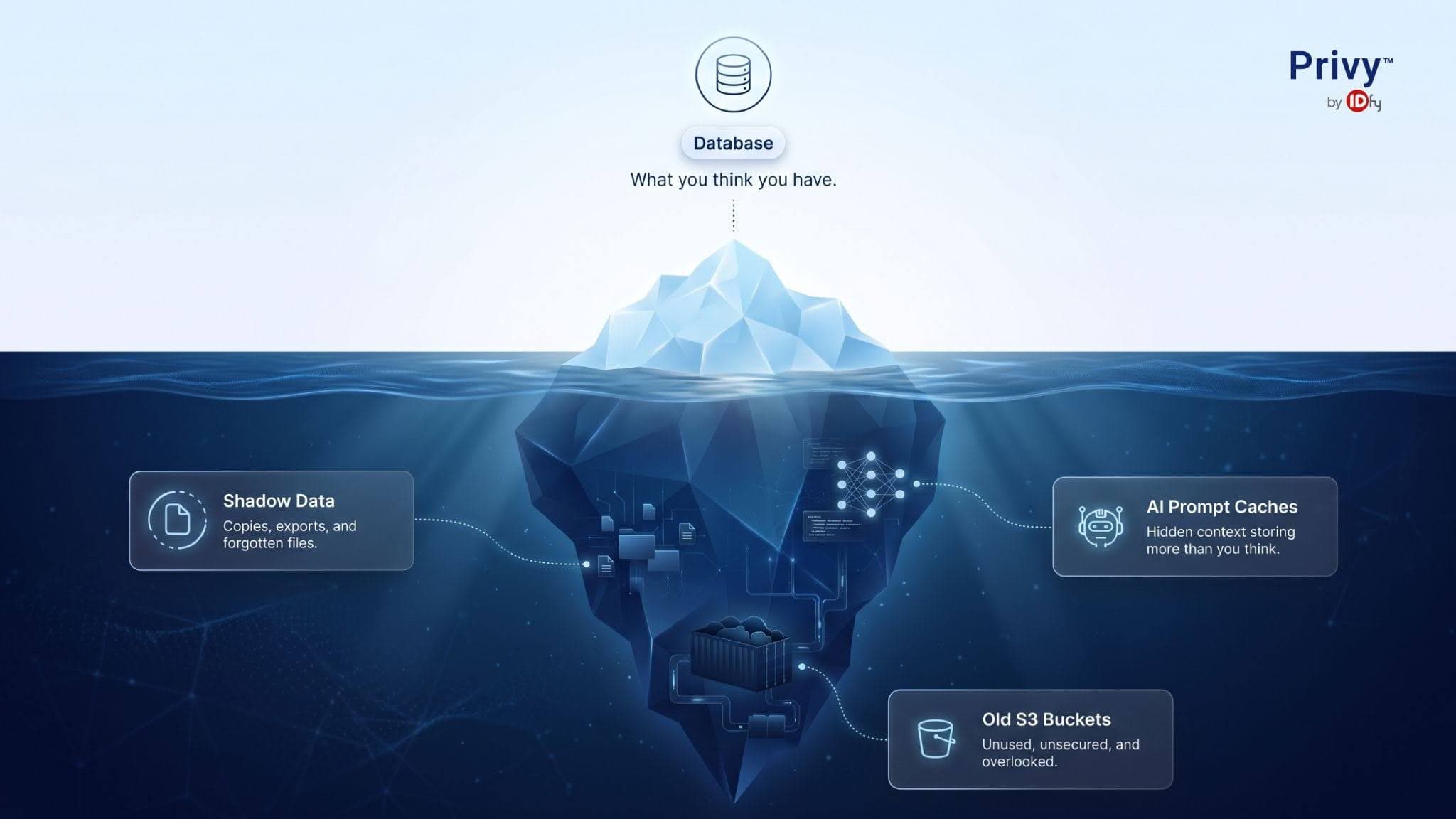
For the modern CISO, 2026 isn't a forecast; it’s a deadline. In India, the Digital Personal Data Protection (DPDP) Act has transitioned from a legislative roadmap into an active enforcement engine, turning student records, customer PII, and financial hashes into high-stakes liabilities.
Historically, we protected the container: the database, the server, the S3 bucket. We assumed that if the "house" was locked, the assets inside were safe.
But in a landscape defined by multi-cloud sprawl and AI-driven data generation, the house no longer has walls. Data today is fluid; it sits in shadow buckets, flows into AI prompt caches, and lives in unmanaged RDS snapshots. This is why Data Security Posture Management (DSPM) has shifted from a niche buzzword to the core of the modern security stack.
DSPM ignores the container to focus on the content. It provides the continuous, data-centric visibility required to answer the only three questions that matter to a regulator: What data do you have, where is it traveling, and who has the right to see it? In this blog, we have discussed DSPM in detail for you to make an informed decision.
What is Data Security Posture Management (DSPM)
As the 2026 data landscape matures, Data Security Posture Management (DSPM) has evolved from a passive reporting tool into the critical enforcement layer for decentralized, high-velocity environments. Unlike infrastructure-centric models, DSPM is data-first and architected to address the visibility-control gap by securing the data itself, regardless of its state or location.
Technical Architecture & Relevance
In modern multi-cloud (AWS, Azure, and GCP) and hybrid stacks, DSPM provides a centralized visibility layer that operates across four technical pillars:
- Continuous Discovery & Shadow Data Hunting: DSPM employs agentless, cloud-native API integrations to systematically scan databases, object storage (S3, Blob), and SaaS applications. Its primary technical value lies in identifying Shadow Data, unmanaged snapshots, forgotten migration buckets, or abandoned developer sandboxes that bypass traditional perimeter controls.
- Automated Classification via AI/ML: Utilizing advanced NLP and machine learning models, DSPM autonomously catalogs structured and unstructured data. It applies granular labels based on sensitivity (PII, PHI, PCI) and business context (e.g., source code, financial secrets), enabling the application of unified security policies across disparate silos.
- Contextual Risk Assessment & Toxic Combinations: The technical core of DSPM in 2026 is its ability to map data to its exposure context. It correlates data sensitivity with IAM permissions, encryption status, and data flows to identify toxic combinations, such as an unencrypted PII database with excessive cross-account access or an active public sharing link.
- Dynamic Data Flow Mapping & Lineage: DSPM visualizes the movement and transformation of sensitive data. By tracing data lineage, it detects anomalous egress patterns or risky transfers into unvetted AI training pipelines, ensuring that data handling remains compliant with rigorous global regulations like GDPR and DPDPA.
While infrastructure tools verify that the room is locked, DSPM provides the intelligence for the entire data security lifecycle:
- Visibility: A real-time, unified inventory of all sensitive data assets.
- Access Governance: Identifying over-privileged non-human identities and stale access rights.
- Compliance Automation: Generating continuous audit trails and mapping controls to regulatory frameworks.
- Active Remediation: Connecting posture findings directly to Data Loss Prevention (DLP) and Security Orchestration (SOAR) workflows to stop attacks at the data source before a breach occurs.

The DPDP Mandate: Why Legacy Tools Fail the Compliance Test
The DPDP Act isn't just a checklist; it’s a performance review with teeth. It demands that "Data Fiduciaries" maintain absolute clarity on what data they hold, why they hold it, and who can access it.
Legacy tools fall short because they are static. A manual data mapping exercise performed once a quarter is obsolete by the time the spreadsheet is saved. The DPDP Act requires a level of data governance capable of handling the "right to erasure" and "right to correction" in near real-time. If a citizen asks you to delete their data, you can’t say, "I think we got most of it." You need to know with surgical precision every location where that specific PII resides.
Furthermore, the DPDP Act emphasizes "Data Protection by Design." This means security cannot be an afterthought; it must be baked into the data lifecycle. DSPM facilitates this by providing continuous monitoring. It identifies misconfigurations, like a bucket containing PII that is accidentally made public, before a breach occurs, allowing for proactive remediation rather than reactive crisis management. We’ve also done a deep dive into the top DPDP compliance tools for detailed research.
Privy: Bridging the Gap Between Policy and Practice
While the theory of DSPM is sound, the implementation is where most enterprises stumble. This is where Privy enters the narrative.
In a landscape cluttered with complex, jargon-heavy security suites, Privy provides a streamlined solution specifically engineered for the nuances of the Indian regulatory environment. It doesn't just find data; it contextualizes it. Privy acts as the connective tissue between your raw data infrastructure and your legal compliance requirements.
Privy’s engine is designed to automate the most grueling aspects of data discovery and data mapping. It recognizes that in 2026, data is fluid. By integrating directly into your workflows, Privy ensures that as new data enters your ecosystem, whether through a customer portal or a third-party API, it is immediately classified and mapped. This reduces the "compliance debt" that usually accumulates between audits.
For organizations struggling with the sheer volume of unstructured data, Privy offers a way to regain control without slowing down the business. It provides a "single source of truth" dashboard that allows both the legal team and the DevOps team to speak the same language.
The AI Factor: DSPM in the Age of Large Language Models
We cannot discuss 2026 without addressing the elephant in the server room: Artificial Intelligence. As organizations rush to integrate Large Language Models (LLMs) and Generative AI into their core products, they are inadvertently creating a new, highly porous attack surface. In fact, industry trends now suggest that AI Data Risks are becoming the primary driver for DSPM adoption globally.
The technical challenge lies in how AI consumes information. When you feed corporate data into a model for training or via RAG (Retrieval-Augmented Generation), that data often loses its original security metadata. It becomes Zombie Data, present, active, and influential in the model's output, but completely detached from its original governance and access controls.
Traditional security tools stop at the database edge; however, in 2026, sensitive data discovery requires a DSPM that can extend its visibility into the AI Data Supply Chain. This includes:
- Model Training Sets: Identifying if PII or "toxic combinations" were used to train a model.
- Vector Databases: Ensuring that embeddings (mathematical representations of your data) are stored with the same rigor as the source records.
- Prompt Engineering Egress: Detecting when developers or employees accidentally paste sensitive CSVs or proprietary code into a ChatGPT-style interface for summarization.
Leading cybersecurity frameworks are now converging on AI-SPM (AI Security Posture Management) as a subset of the broader DSPM umbrella. Key trends for 2026 include:
- Prompt Injection & Data Exfiltration: Modern DSPM solutions are being integrated with AI Firewalls to scan prompts in real-time for sensitive data before they ever reach the LLM's history or cache.
- Regulatory Convergence: The DPDP Act and the EU AI Act make no distinction between data sitting in a SQL database and data sitting in an AI prompt cache. If sensitive data is leaked through an AI response, it constitutes a breach under the law.
- Automated Data Redaction for RAG: To move faster without risk, organizations are using DSPM to automatically identify and redact sensitive entities before they are ingested into vector databases for RAG pipelines.
A robust DSPM strategy is no longer just about guarding the "Vault"; it’s about monitoring the flow. By identifying these AI egress points, a DSPM prevents sensitive data from being sucked into the "black box" of an LLM, where it could be surfaced to unauthorized users through indirect prompt injections or model hallucinations.
In 2026, your AI is only as secure as the data that feeds it. Transitioning from a reactive to a Proactive Data Posture ensures that your innovation doesn't become your biggest liability.
Best Practices for AI Data Security
- Sanitize RAG Inputs: Use automated classification to filter out PII before it enters the AI's working memory.
- Monitor Non-Human Identities: Track the service accounts and APIs that connect your data lakes to your LLMs to ensure they aren't over-privileged.
- Maintain Data Lineage: Ensure you can trace a piece of sensitive data from its source to the specific AI model or prompt where it was utilized.
Orchestrating Data Governance for the Long Term
Effective data governance is not a project; it’s a posture. It requires a fundamental shift from securing the perimeter to securing the data.
This involves three critical pillars:
- Data visibility: You cannot protect what you cannot see. Continuous data discovery must be the baseline.
- Context: Not all data is created equal. Data classification helps you prioritize your security spend on the assets that actually pose a risk.
- Accountability: Data mapping provides the lineage required to prove to regulators that you are a responsible steward of citizen data.
In 2026, the cost of a data breach is overshadowed by the cost of non-compliance. The DPDP Act’s penalties are designed to be significant and deterrent. Relying on manual processes in a world of automated threats is no longer a viable business strategy.
Conclusion
The tension between security and speed is an old tale, but DSPM is the first technology to promise to resolve it. Automating the discovery and classification of data, it removes the bottleneck of manual security reviews. Developers can move fast because the guardrails are invisible and automated.
As we look toward the rest of 2026, the question for Indian enterprises is no longer if they should implement a DSPM solution, but how fast they can do it. The complexity of modern data stacks, combined with the stringent requirements of the DPDP Act, makes DSPM the only logical path forward.
The goal of DPDP compliance is ultimately about building trust. Customers in 2026 are data-literate; they know their rights, and they will gravitate toward platforms that respect their privacy. By adopting a data-centric security model, you aren't just avoiding fines; you are building a brand that is resilient, transparent, and ready for the future of the digital economy.
Navigating the complexities of the DPDP Act and the technical nuances of DSPM doesn't have to be a solitary journey. Whether you are looking to overhaul your data mapping or need a more robust sensitive data discovery engine, we are here to help.
For a deeper dive into how Privy can secure your organization’s data posture and ensure seamless compliance, reach out to us at shivani@idfy.com. We would be more than happy to help.

How to choose the right privacy impact assessment tool. Explore the best data privacy management software & understand how to conduct an assessment
-1.jpg&w=3840&q=75)
Achieve DPDP compliance without rework. Our Right-First-Time framework combines sequencing, design, and automation for seamless Indian readiness.