

Scalable DPDP Encryption: Strategies for PII Data Protection & Compliance
Date Published
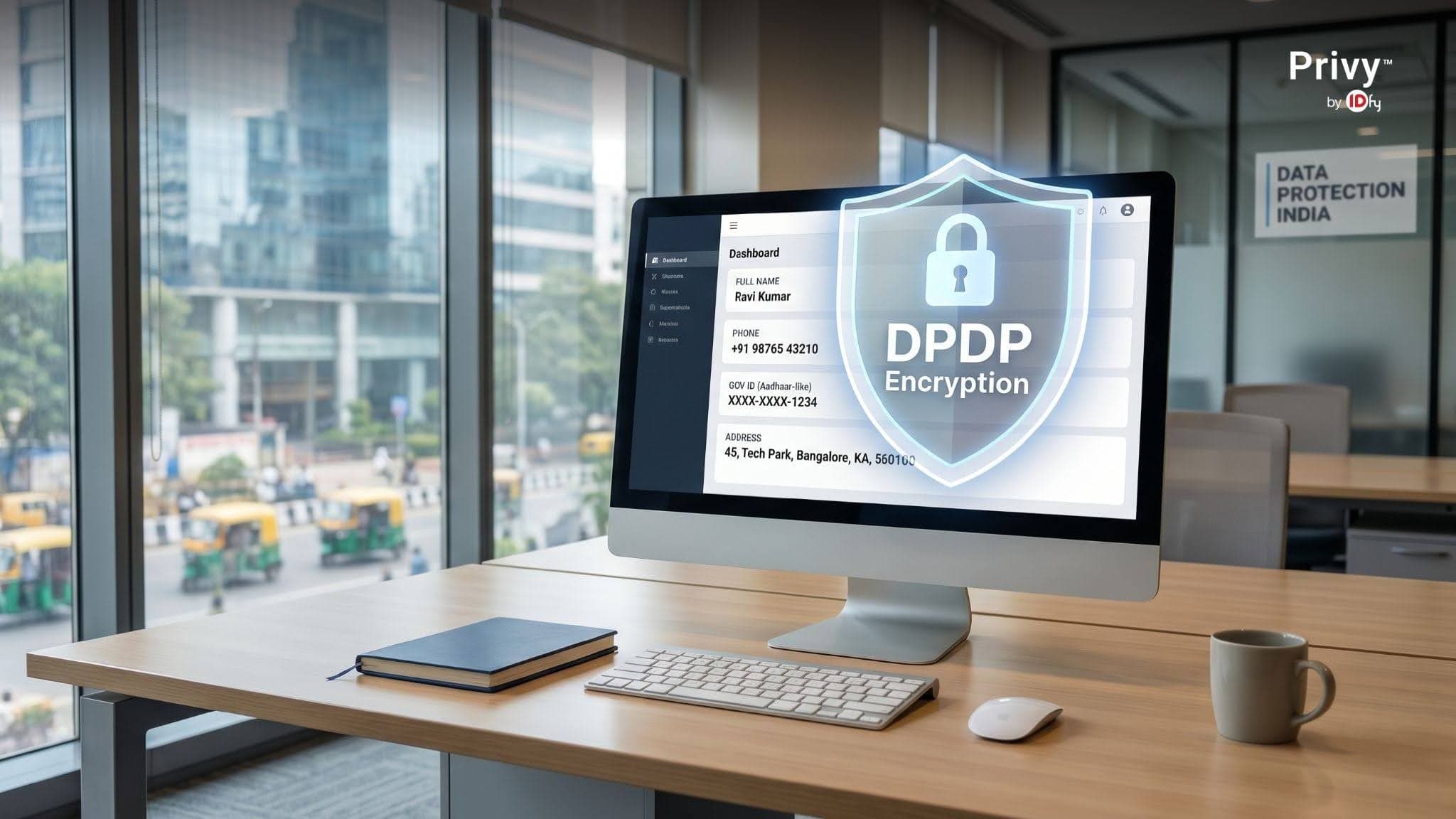
It usually happens during a mid-week architecture review. The legal team issues a blanket directive to encrypt all Personally Identifiable Information (PII) at rest. The lead database architect replies that applying field-level encryption to every single column will spike query latency by 400 percent, causing the application to time out before the user can even log in.
In practice, this raises a more fundamental question: Should all PII data even be encrypted equally, or should protection follow risk and context?
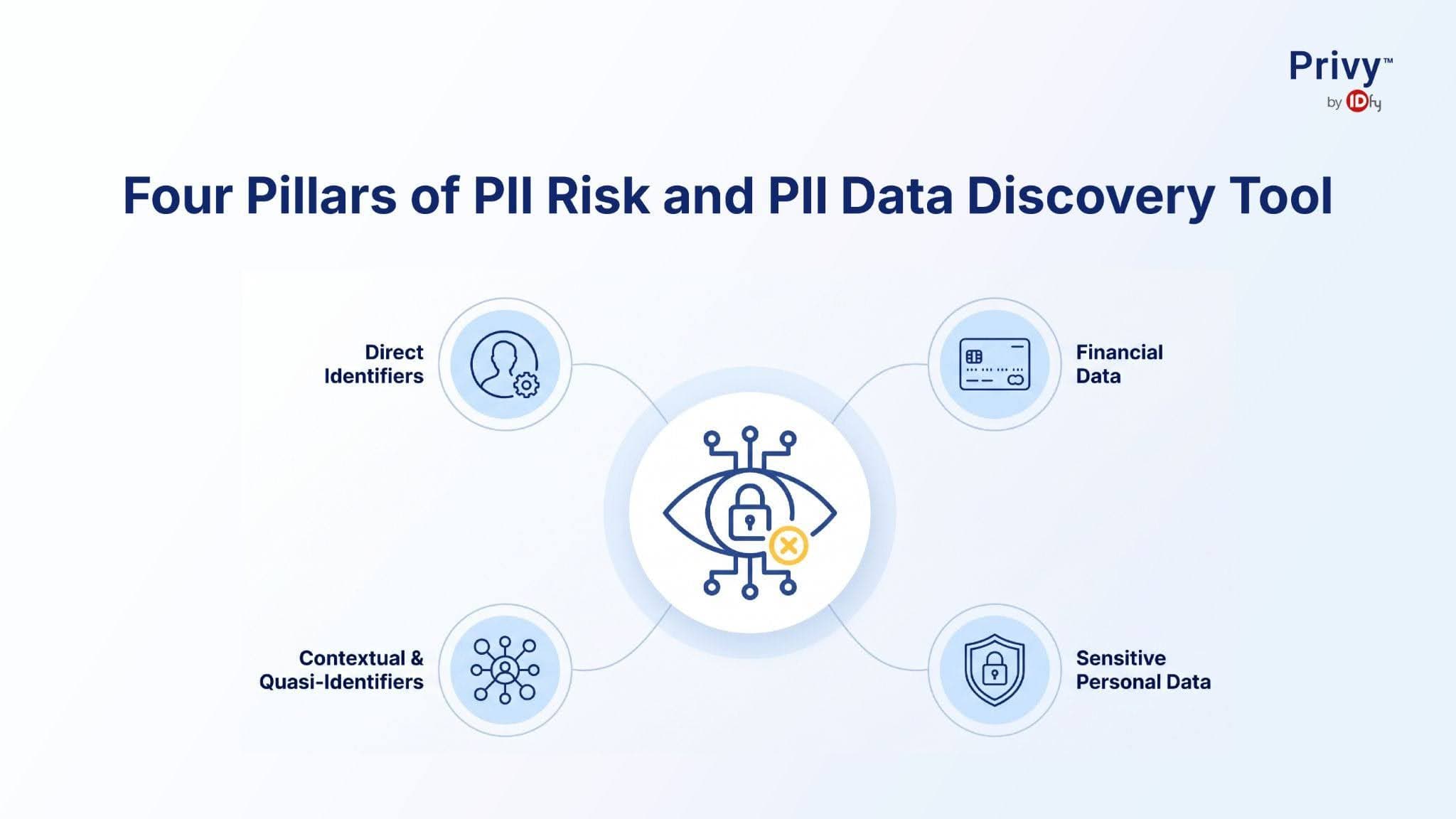
The Four Pillars of PII Risk and PII Data Discovery Tools
The hard truth is that the DPDP Act does not provide a prescriptive checklist of columns to encrypt. The Act mandates "reasonable security safeguards," which places the burden of architectural design on us. Using PII data discovery tools and PII detection tools is the first step in identifying exactly where this information lives. We have also done a detailed blog on privacy impact assessment tools for more insights.
From a product and engineering standpoint, we have to treat Personally Identifiable Information (PII) as radioactive material. It powers the business, but if it leaks outside its containment unit, the blast radius is catastrophic. If you treat your database as a monolith and apply heavy cryptography everywhere equally, you will cripple your infrastructure.
Before we can protect the data, we must classify it. In practice, security teams prioritize protection across four distinct categories:
- Direct Identifiers: The absolute baseline. Mobile numbers, email IDs, PAN, Aadhaar, passports, and core account IDs.
- Financial Data: The primary targets for financial fraud encompass bank account numbers, credit card details, and UPI IDs.
- Sensitive Personal Data: High-liability attributes that cause immediate personal harm if leaked, including health records, medical histories, and biometric markers.
- Contextual & Quasi-Identifiers: Date of birth, IP addresses, location data, and behavioral patterns. While seemingly benign in isolation, these data points enable highly accurate profiling and re-identification when a threat actor combines them.
Classification alone is not sufficient. The same piece of PII data carries different risks depending on its lineage and context. An email ID in a login table is an authentication surface, while that same email inside a static invoice PDF carries a significantly lower operational risk.
Architecting for PII Compliance: The Latency Trade-Off
Cryptography requires computing power. While other strategies like Zero Trust or aggressive Data Minimization exist, most organizations find their balance using one of two primary architectural stances to maintain PII compliance:
- The Use-Case Driven Approach: This is the balanced route. Controls are tightly aligned to how data actually flows through the pipeline. By selectively applying cryptography based on purpose, risk level, and access frequency, engineering teams can protect the data without breaking the user experience.
- The Risk-First Approach: Common in highly regulated environments like banking or defense. They treat most PII data as highly sensitive by default and intentionally accept the "latency tax." They prioritize regulatory and financial safety over infrastructure cost, throwing more compute at slower queries to maintain basic usability.
While these two are not the only ways to architect privacy, they provide the most practical starting point for engineering leaders balancing compliance with system stability. Here’s a step-by-step guide on how to do privacy impact assessments for Indian businesses.
A Decision Framework for PETs and PII Detection Tools
Compliance under DPDP is not about encrypting everything. It is about using PII detection tools to understand where data exists, how it flows, and applying the right control at the right point. To manage the latency tax, organizations must move away from "blanket directives" and toward a Decision Logic where the security layer is a function of:
[Data Type, Risk Level, Access Frequency, Data Disclosure Needed for Processing]
By applying this logic, we can map the standard toolkit to specific data flows and industry use cases:
- Baseline Protection (TDE): For high-frequency, low-risk fields like a customer name, email ID, or shipping address in an e-commerce platform, Transparent Data Encryption (TDE) is the workhorse. It ensures protection against storage-level breaches without impacting query performance for high-frequency operational workflows.
- Precision Control (Field-Level Encryption): When you move up the risk ladder to fields with direct regulatory implications, TDE is no longer sufficient. If a healthcare platform is storing patient histories, or an HR system is managing Aadhaar numbers and biometric templates, these fields require precision control. Encrypting them at the field level ensures that even if internal databases are accessed, the most critical identity data remains locked and accessible only through tightly controlled APIs.
- Blast Radius Isolation (Tokenization & Vaulting): Consider a fintech payment gateway where credit card numbers and UPI IDs are required for transactions. The actual financial identifiers are stored in a highly secure, isolated vault. Mathematically unrelated tokens are then used across the broader ecosystem. This ensures the most sensitive financial data never touches downstream analytics or marketing systems.
- Least-Privilege Access via PII Masking: Most internal users do not need full visibility into sensitive data to do their jobs. By utilizing PII masking and Format-Preserving Techniques, we can obscure email addresses or show partial account numbers on a customer support dashboard. This ensures usability for relationship managers and BPO agents while enforcing least-privilege access, drastically reducing the risk of internal misuse. Wondering how to choose the right PIA tool? Read this blog.
The Verdict: The Privacy-by-Design Transformation
Encryption is only one layer of the strategy. Without access controls, monitoring, and purpose limitation, even encrypted systems can expose sensitive data through legitimate but excessive access.
As practitioners, we need to rethink how we design systems, placing privacy at the center through an end-to-end transformation. True PII compliance is not a security patch; it is a shift toward Privacy-by-Design, within which Privacy-Enhancing Technologies (PETs) play a focused but important role.
This means moving beyond simply “hiding” data to managing how much is disclosed, when, and for what purpose. PETs support this by enabling selective and minimal disclosure based on the needs of each use case. In this model, PETs are not bolt-ons but one of the mechanisms embedded within the broader data lifecycle.
Have questions about implementing these frameworks? For further queries on how to navigate DPDP compliance or to explore our suite of PII detection tools, reach out to us at shivani@idfy.com.

Learn how to choose the right privacy impact assessment tool for India’s DPDP Act. Explore features of the best data privacy management software, understand how to conduct a privacy impact assessment, and ensure proactive compliance
-1.jpg&w=3840&q=75)
Achieve DPDP compliance without rework. Our Right-First-Time framework combines sequencing, design, and automation for seamless Indian readiness.