

PIAs Under India’s DPDP Act: Understanding Data Privacy Impact Assessments
Date Published

India’s Digital Personal Data Protection (DPDP) Act has officially changed the conversation around data privacy. For years, privacy discussions in India hovered around global frameworks like the GDPR, and now, with the DPDP Act in place, compliance is no longer theoretical; it is local, enforceable, and operational. With the DPDP rules out, non-compliance is no longer a mistake; it's a blunder worth ₹250 crore. Therefore, Indian businesses are asking questions that go beyond consent and understanding ways to create a robust trust and privacy infrastructure.
One of the most frequently asked questions emerging from boardrooms and compliance teams alike is this: Do we need Privacy Impact Assessments (PIAs) under the DPDP Act? And what is the difference between PIA and DPIA in this context?
Let’s unpack it, clearly and practically, and deep dive into what PIAs are under India’s DPDP Act.
The DPDP Act and the New Data Privacy Reality in India
The DPDP Act introduces a structured approach to data privacy in India. It defines obligations for Data Fiduciaries, strengthens rights for Data Principals, and empowers the Data Protection Board of India to enforce compliance. At its core, the Act emphasizes lawful processing, purpose limitation, data minimization, accountability, security safeguards, and transparency.
However, unlike the GDPR, the DPDP Act does not explicitly use the term Privacy Impact Assessment in the same way European frameworks do.
Instead, it refers to obligations around Significant Data Fiduciaries (SDFs) and high-risk processing activities, which strongly imply the need for structured risk assessments often in the form of a data privacy impact assessment, and this is where the confusion begins.
Privacy Impact Assessment vs. Data Privacy Impact Assessment
Before we go further, let’s clarify the terminology. A Privacy Impact Assessment (PIA) is a broad risk assessment exercise conducted to evaluate how a project or system impacts individual privacy.
A Data Privacy Impact Assessment (DPIA) is often considered a more formal, legally mandated version of that exercise, typically required for high-risk processing under frameworks like the GDPR. So what is the difference between PIA and DPIA? In simple terms:
- A PIA can be voluntary or a best practice.
- A DPIA is usually legally required for high-risk processing.
- A DPIA often has stricter documentation and approval requirements.
Under India’s DPDP Act, while the terminology may not mirror GDPR exactly, the expectation of risk assessment for certain data fiduciaries aligns closely with the concept of a data privacy impact assessment. In other words, whether you call it a PIA or a DPIA, structured risk evaluation has become unavoidable.
When Are PIAs Relevant Under the DPDP Act?
The DPDP Act introduces the concept of Significant Data Fiduciaries (SDFs). These entities are identified based on factors like volume and sensitivity of personal data processed, risk to the rights of Data Principals, use of new technologies, and potential impact on national interests. Significant Data Fiduciaries are expected to appoint a Data Protection Officer (DPO), conduct periodic audits, and undertake impact assessments.
While the Act does not prescribe a detailed format, the implication is clear:
Organizations engaged in high-risk processing must conduct structured risk evaluations, effectively a privacy impact assessment.
If the organization processes large-scale personal data, children’s data, sensitive financial or health information, and data used in automated decision-making, the organization should strongly consider implementing a data privacy impact assessment framework. We have also done a detailed blog on how to conduct DPIA in this step-by-step guide.
Why PIAs Matter More Than Ever in India
Let’s step back from legal obligations for a moment. Beyond compliance, conducting a privacy impact assessment under the DPDP Act also helps organizations to identify data collection redundancies, reduce over-processing, strengthen internal governance, improve vendor accountability, avoid regulatory penalties, and build customer trust.
India’s digital economy is expanding rapidly, with fintech, healthtech, edtech, AI platforms, and cross-border SaaS companies scaling fast. With scale comes complexity, and with complexity comes risk. Enter PIAs, bringing structure into this chaos.
DPDP-Aligned Data Privacy Impact Assessment
If you’re wondering how to operationalize this under Indian law, here’s a practical breakdown.
1. Map Your Data Ecosystem
Start with visibility.
- What data do you collect?
- Why do you collect it?
- Where is it stored?
- Who accesses it?
- Which processors are involved?
- Is data transferred outside India?
Without mapping, any privacy impact assessment becomes superficial.
2. Identify Risk Factors
Under the DPDP Act, focus particularly on:
- Risks to Data Principal rights
- Harm arising from misuse
- Unauthorized access
- Data breaches
- Profiling and automated decision-making
- Children’s data handling
The more sensitive the data, the more robust the data privacy impact assessment must be.
3. Evaluate Lawful Purpose and Minimization
Are you collecting more data than necessary? Is the purpose clearly defined and communicated? Purpose limitation is a central pillar of the DPDP framework, and PIAs help test whether your collection aligns with necessity.
4. Assess Consent Mechanisms
Under the DPDP Act, consent must be free, specific, informed, and unambiguous. Your privacy impact assessment should evaluate whether the consent notices are transparent, whether withdrawal mechanisms are functional, and whether the records are properly maintained.
5. Review Security Safeguards
Security is explicitly required under the DPDP Act. The PIA should assess encryption measures, access controls, incident response plans, and vendor security standards.
6. Document Findings and Mitigation
Every risk identified should have a mitigation strategy, an accountable owner, a timeline, and a residual risk evaluation. This documentation becomes critical if regulators request evidence of compliance.
The Strategic Difference Between PIA and DPIA in India
The difference between PIA and DPIA, in the Indian context, is subtle but important.
A general privacy impact assessment may be conducted for new features, marketing initiatives, and vendor onboarding. A DPIA-like assessment under the DPDP Act becomes necessary when the organization is a designated Significant Data Fiduciary, where processing is large-scale, automated decision-making affects individuals, and children’s data is involved. Think of DPIA as the high-alert version of a PIA. The rigor increases, documentation deepens, and the oversight becomes stronger.
Organizations that treat all PIAs casually may struggle if designated as Significant Data Fiduciaries later. Building robust systems in the early stages is strategic and necessary.
Where Privy by IDfy Fits Into the DPDP Landscape
As organizations grow, digital journeys multiply, consent versions change, processors expand, data fields evolve, and AI systems enter workflows. In this process, it's very difficult to keep up with manual spreadsheets, as documentation becomes outdated quickly.
This is where governance tools must move from static documentation to dynamic intelligence.
The DPDP Act demands accountability, not just intention. This is precisely the gap Privy is addressing. Privy’s Consent Governance Platform and Inspect AI are built to operationalize data privacy impact assessments in a dynamic digital environment. Instead of relying on manual audits, Privy enables automated digital journey analysis, real-time identification of personal data fields, purpose-to-data mapping, automated RoPA creation, processor tracking, version-controlled consent artifacts, and immutable audit trails.
For organizations navigating the difference between PIA and DPIA under the DPDP Act, Privy introduces structured, scalable oversight. It transforms privacy impact assessment from a document into a living compliance ecosystem. And in a regulatory climate where enforcement will intensify, that shift matters.
Conclusion
India’s DPDP Act is not just another regulation. It signals a maturing digital economy where data privacy is foundational, not optional. Whether you are conducting a basic privacy impact assessment or a full-scale data privacy impact assessment aligned with SDF obligations, the goal remains the same: protect individuals, reduce harm, demonstrate accountability, and build trust. The organizations that succeed under the DPDP framework will not be those doing the bare minimum.
They will be the ones building privacy into their operational DNA. If you’re navigating PIAs under India’s DPDP Act or trying to understand the practical difference between a PIA and DPIA for your organization, we’re here to help. Reach out to us at shivani@idfy.com and let’s build privacy governance systems that are not just compliant but also resilient and future-ready.
FAQ's
Is a privacy impact assessment mandatory under the DPDP Act?
The DPDP Act does not use the phrase "privacy impact assessment" directly, but it does require Significant Data Fiduciaries to undertake periodic impact assessments as part of their SDF obligations. For organisations that are not yet designated as SDFs, a PIA is not explicitly mandated — but it is strongly implied by the Act's broader accountability and security safeguard requirements. If you process personal data at scale, use automated decision-making, handle children's data, or process sensitive financial or health information, conducting a privacy impact assessment is a defensible compliance practice regardless of whether you have been formally designated.
What is a DPIA and how is it different from a PIA under Indian law?
A DPIA — or Data Privacy Impact Assessment — is a formal, structured risk evaluation specifically required for high-risk processing. Under the GDPR, it is a legal requirement before processing that is likely to result in high risk to individuals. Under India's DPDP Act, the equivalent obligation applies to Significant Data Fiduciaries, though the Act uses the term "impact assessment" rather than DPIA specifically. A PIA is the broader category — a risk evaluation exercise that any organisation can conduct voluntarily to assess how a project or system affects individual privacy. In practice, the distinction matters when determining the rigor required: an SDF conducting an impact assessment under the DPDP Act should treat it with the documentation depth and approval requirements of a DPIA, not a light-touch PIA.
Who qualifies as a Significant Data Fiduciary under the DPDP Act?
The DPDP Act does not publish a fixed list. Significant Data Fiduciaries are designated by the Central Government based on several factors: the volume and sensitivity of personal data processed, the risk to the rights of Data Principals, the use of new or emerging technologies, and the potential impact on national security or public order. In practical terms, large BFSI institutions, healthtech and edtech platforms, AI-driven analytics companies, and digital platforms processing data of tens of millions of users are the categories most likely to receive SDF designation. MeitY is expected to publish designation criteria and the initial list of SDFs during the 2025–2026 period. Organisations that process data at scale should build their privacy impact assessment infrastructure now rather than waiting for formal designation — because the obligations trigger from the date of designation, and building a programme from scratch after the fact is significantly harder.
What happens if we don't conduct a privacy impact assessment and then get designated as an SDF?
SDF designation carries immediate operational obligations: appoint a DPO, engage an independent data auditor, conduct periodic impact assessments, and implement additional security measures. An organisation that has no PIA programme in place at the time of designation faces the challenge of building it under regulatory scrutiny. The penalty for failing to comply with SDF obligations can reach ₹150 crore under the DPDP Act's penalty schedule, in addition to penalties that may arise from related failures in security safeguards or breach notification. The more significant risk is operational: a PIA conducted under time pressure, after designation, is less likely to surface genuine risks than one built into the organisation's development and procurement cycles as standard practice.
Does every new product feature or vendor integration require a PIA?
Not necessarily, but it is worth applying a screening threshold. A new feature that processes a new category of personal data, expands data sharing with processors, introduces automated decision-making, or affects children's data should trigger a privacy impact assessment. Routine changes to existing processes that do not alter the data collected, the purpose, the processors involved, or the individuals affected do not necessarily require a fresh PIA — though they should be reviewed against the existing one. A practical approach is to define internal screening criteria tied to the DPDP Act's risk factors: data sensitivity, scale, use of new technology, and impact on Data Principal rights. Any feature or vendor that hits one or more of those criteria goes through a structured assessment.
Can a PIA conducted under the DPDP Act also satisfy our GDPR obligations for our European operations?
Partially, but not fully. A DPDP-aligned privacy impact assessment covers purpose limitation, consent adequacy, Data Principal rights, security safeguards, and processor accountability — all of which are also GDPR concepts. However, the GDPR has specific DPIA requirements that go beyond what the DPDP Act currently prescribes, including mandatory consultation with the supervisory authority when residual risk remains high, and a stricter threshold for when a DPIA is legally required. Organisations with both Indian and European operations should design their PIA framework around the stricter GDPR requirements, which will then satisfy the DPDP Act's obligations as well. Privy's PIA module is built to handle this cross-regulatory documentation, which makes it useful for GCCs and MNC subsidiaries managing dual-jurisdiction programmes.
How often should a privacy impact assessment be reviewed or updated?
A PIA is a living document, not a point-in-time certificate. It should be reviewed whenever a material change occurs: a new processor is added, a significant data field is introduced, an AI system enters a workflow, the consent notice is revised, or the regulatory framework changes. Under the DPDP Act, Significant Data Fiduciaries are expected to conduct periodic impact assessments — the frequency of which will likely be prescribed in more detail as the Board issues further guidance. As a baseline, a full review annually and a lighter-touch review triggered by material changes is a defensible standard. For organisations using dynamic tools like Privy's PIA module, the review cycle becomes less burdensome because changes to data flows and processing activities are tracked continuously rather than assembled from scratch each year.
What documentation should a privacy impact assessment produce to satisfy a DPDP regulator?
The Data Protection Board will examine whether the organisation took appropriate technical and organisational measures to protect personal data. A well-documented PIA should produce a record of what data is being processed and why, an assessment of the risks to Data Principal rights, the mitigation measures implemented for each identified risk, the residual risk after mitigation and the rationale for accepting it, the name of the accountable owner for each mitigation, and evidence that the assessment was conducted before the relevant processing activity began. This documentation becomes the compliance artefact if the Board examines your programme. For Significant Data Fiduciaries, the independent data auditor will also review these records as part of the periodic audit obligation, so the quality of documentation matters as much as the quality of the assessment itself.
What is the connection between a DPIA and a Record of Processing Activities under the DPDP Act?
A RoPA and a DPIA serve different but related purposes. The RoPA documents what personal data is processed, for what purpose, by whom, and under what legal basis — it is the inventory. A DPIA evaluates the risks associated with specific processing activities within that inventory and documents how those risks have been mitigated. A well-constructed PIA programme feeds directly into the RoPA: the data identified and scoped during a PIA becomes a verified entry in the processing record. Tools like Privy that automate RoPA generation from digital journey analysis and purpose-mapping also make the PIA output more reliable, because the data flowing into the assessment reflects actual processing rather than declared processing.
We're a mid-sized fintech. Do we need to conduct DPIAs now or wait for SDF designation?
You don't need to wait for designation, and waiting carries real risk. A mid-sized fintech typically processes Aadhaar-linked KYC data, financial transaction records, credit bureau data, and often behaviour analytics — categories that sit squarely within the DPDP Act's high-sensitivity and high-volume criteria. More practically: the act of conducting privacy impact assessments before processing begins is itself a demonstration of accountability under Section 8 of the DPDP Act, which requires data fiduciaries to implement appropriate technical and organisational measures. Conducting PIAs as a standard part of product development puts you in a better compliance position regardless of whether SDF designation follows. And if it does follow, you will have a programme already running rather than one you need to build in a hurry.
-1.jpg&w=3840&q=75)
Achieve DPDP compliance without rework. Our Right-First-Time framework combines sequencing, design, and automation for seamless Indian readiness.
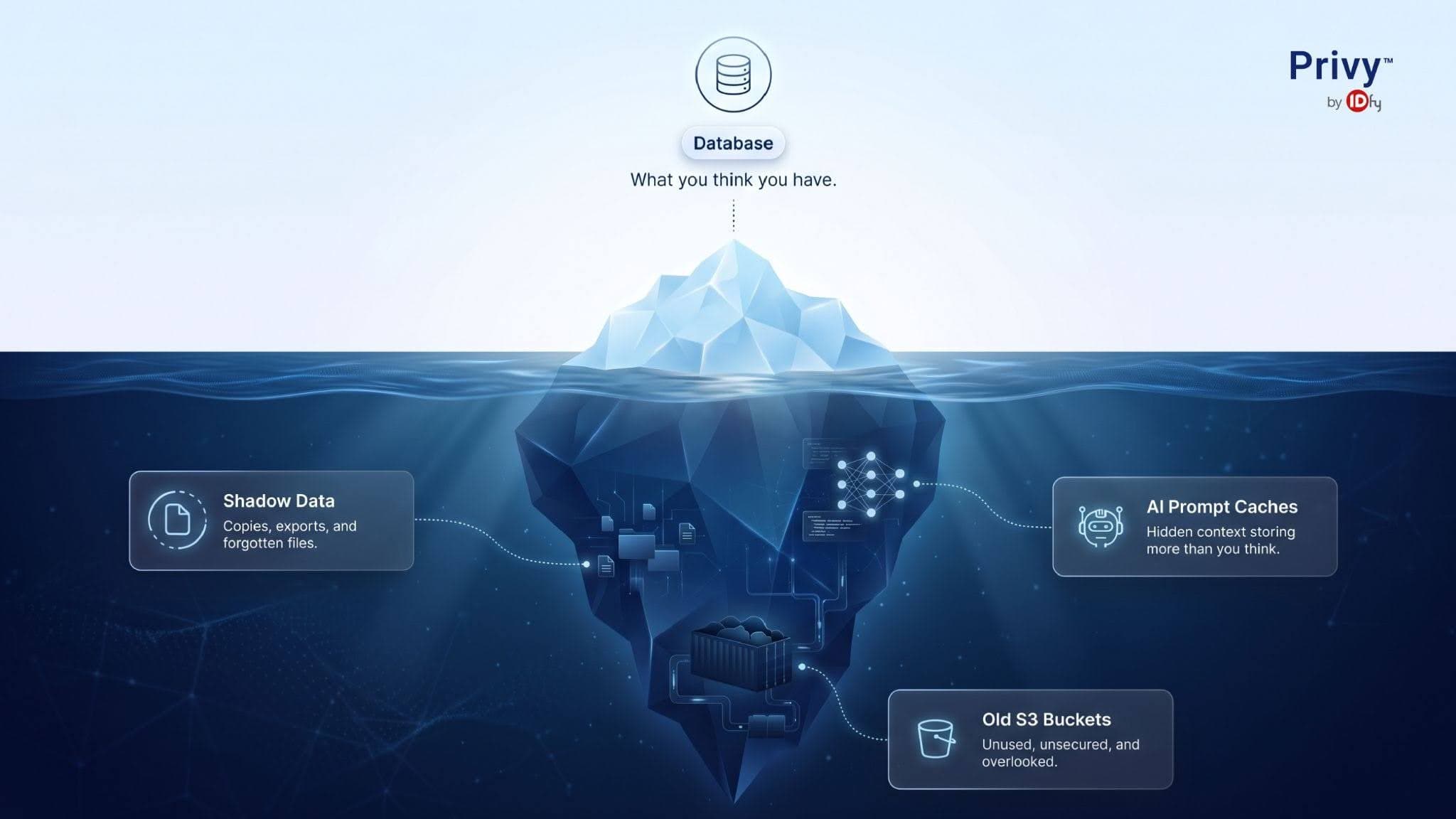
Master DPDP compliance with Data Security Posture Management. Learn how automated data discovery, classification, and mapping secure sensitive data.