

Guide for Privacy Impact Assessments: Steps & Top 5 PIA Tools
Date Published
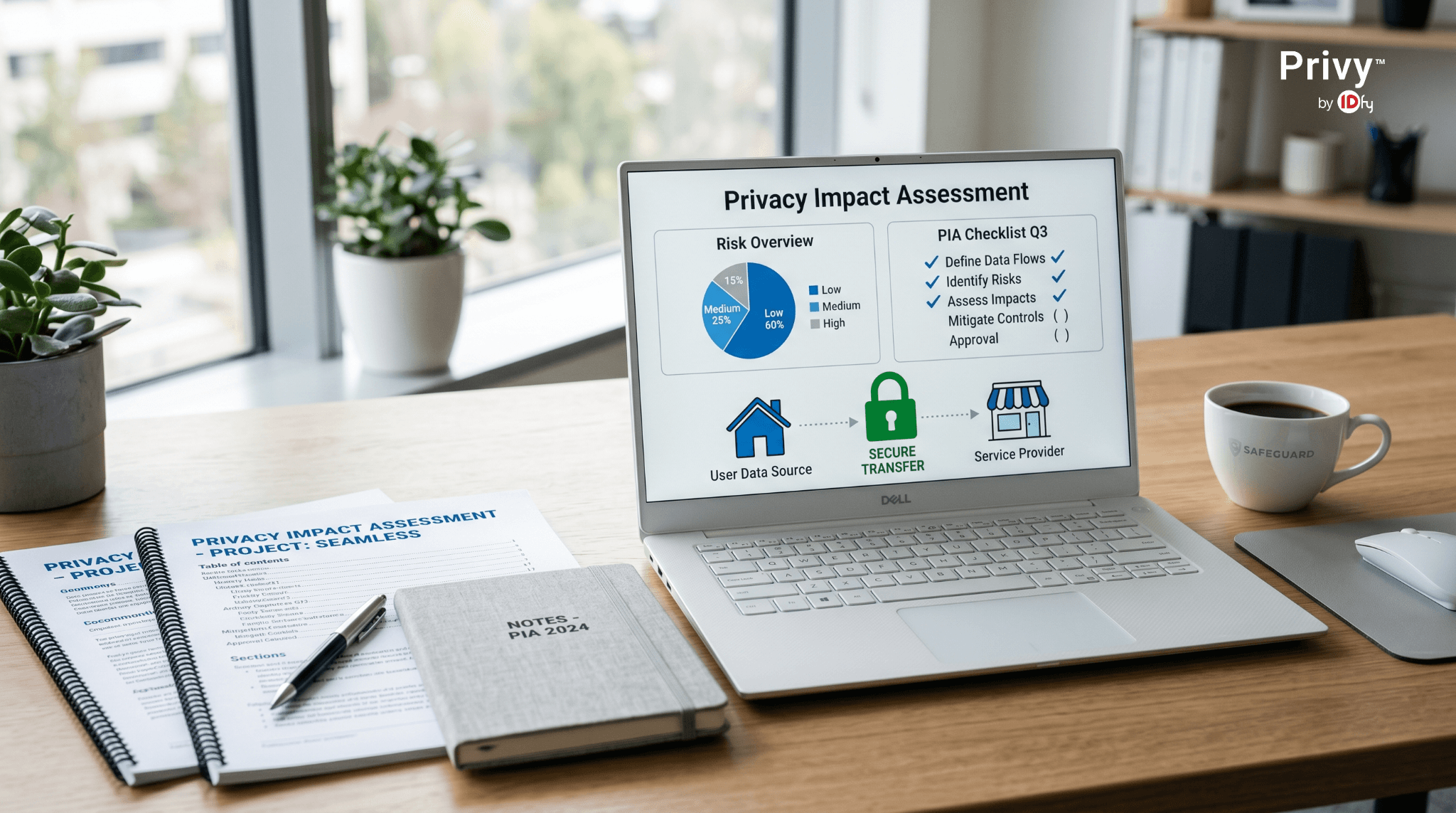
The transition from data as a strategic asset to a potential systemic liability has reached a tipping point. In 2026, the regulatory climate, spearheaded by India’s DPDP Act and the evolving stringency of GDPR, has rendered traditional, reactive security models obsolete. For the modern CISO, a Privacy Impact Assessment (PIA) is no longer a check-the-box compliance exercise; it is the fundamental architectural audit required to validate the integrity of the data supply chain.
The current enforcement-first era is defined by unprecedented regulatory scrutiny. Recent high-profile data sovereignty disputes and the resulting "black swan" fines have demonstrated that a single governance oversight can effectively decapitate a mid-market enterprise. In this high-stakes environment, PIAs serve as the strategic reconnaissance performed before a single byte is ingested.
Rather than a static PDF residing in a repository, a modern PIA is a dynamic, risk-based blueprint. It functions as the structural integrity report for your digital ecosystem, identifying how latent vulnerabilities in third-party APIs could trigger a catastrophic regulatory meltdown. In this blog, we shall uncover the world of privacy impact assessment in detail.
What is a Privacy Impact Assessment and Why Should You Care?
At its core, a privacy impact assessment is a process designed to identify and mitigate privacy risks throughout the lifecycle of a project. While often used interchangeably with a data privacy impact assessment (DPIA), the nuance lies in the scope. A DPIA is frequently a regulatory requirement under frameworks like GDPR for high-risk processing, whereas a PIA is the broader strategic practice of evaluating how information is handled to ensure it conforms to regulatory, legal, and ethical standards.
For the modern C-suite, the PIA is the ultimate hedge against "compliance debt." Just as technical debt slows down software, compliance debt and ignored privacy risks eventually lead to massive fines and loss of consumer trust.

How to Perform a Privacy Impact Assessment
Performing a data privacy audit isn't about ticking boxes; it’s about mapping the DNA of your data flow. A successful PIA doesn't just identify risks; it serves as a strategic roadmap for Privacy by Design. Here is the enhanced framework for conducting a comprehensive assessment.
1. The Threshold Assessment: Start with “Why”
Not every project requires a 50-page deep dive. The first step is a Threshold Assessment, a quick screening to determine if the processing poses a "high risk" to individuals.
- Trigger Points: You must conduct a full PIA if the project involves:
- Sensitive Data: Biometrics, health records, or financial history.
- Vulnerable Groups: Data involving children or employees.
- New Technologies: Implementing AI, machine learning, or IoT devices.
- Automated Decision-Making: Algorithms that impact a user’s legal status or creditworthiness.
Identifying these triggers early saves your engineering team from "compliance debt" later in the development cycle.
2. Comprehensive Data Flow Mapping
This stage involves documenting the biography of a data point. To be value-rich, don't just look at where data sits; look at how it moves.
- Ingestion (Source): Distinguish between data provided directly by the user vs. observed data (IP addresses, cookies) vs. inferred data (AI-generated profiles).
- Processing (Usage): Document every transformation. Is the data being aggregated? Is it being used to train a model?
- Transfer (Sharing): Identify Data Processors (cloud providers, CRM tools) and Data Controllers (partners). Note if data crosses international borders, which may trigger GDPR or CCPA cross-border transfer requirements.
- Deletion (The End of Life): Define the retention trigger. Does the data delete 30 days after account closure, or is it archived indefinitely?
3. Multi-Dimensional Risk Identification
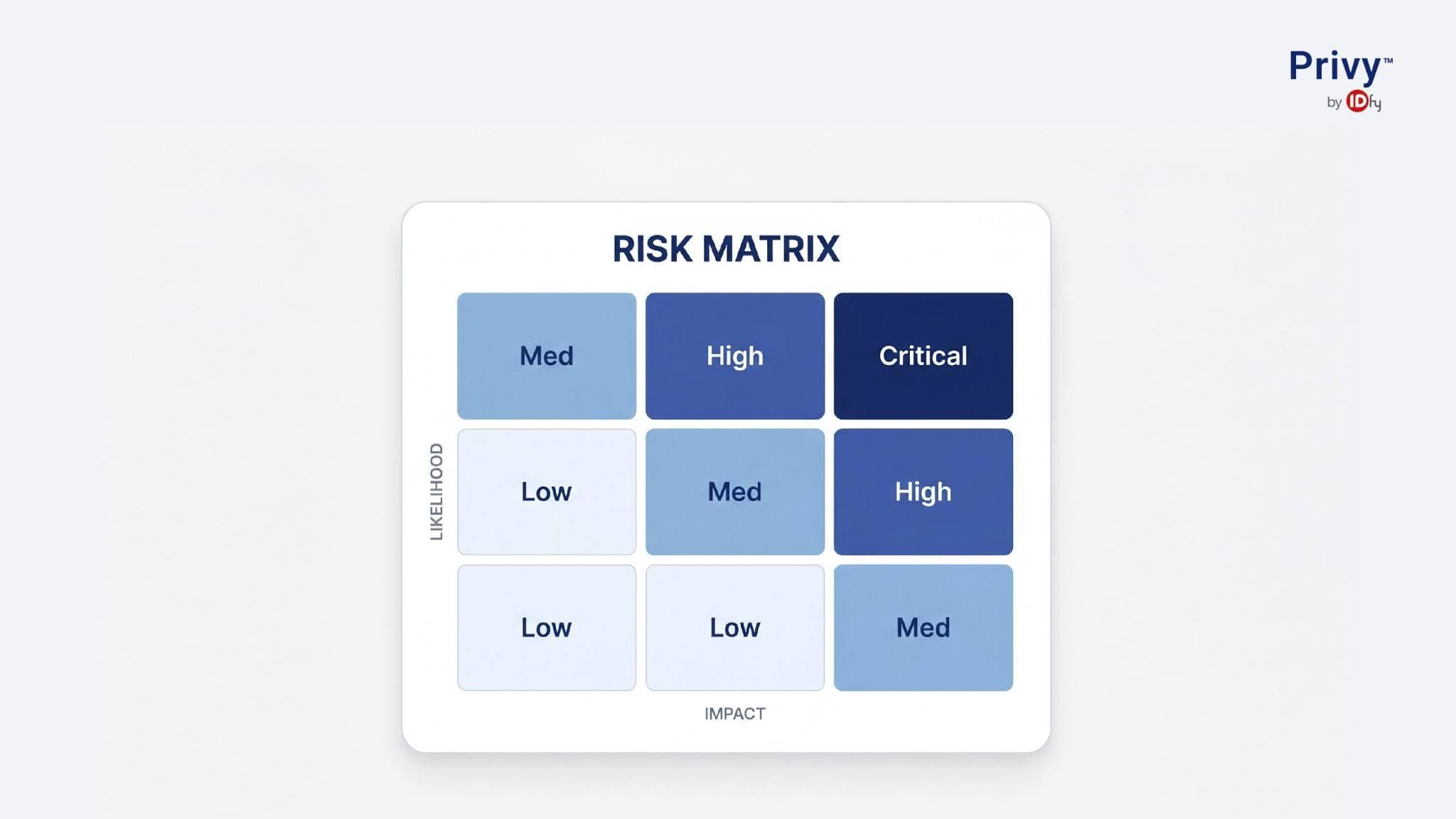
Instead of just playing What If, use a structured risk matrix. Evaluate risks across three dimensions:
- Individual Risk: Could this lead to identity theft, discrimination, or creepy over-surveillance?
- Compliance Risk: Does this process violate specific articles of the DPDPA, GDPR, CCPA, or your industry’s specific regulations?
- Reputational Risk: Even if it’s legal, would your customers feel betrayed if they knew this was happening?
- Evaluation: Score each risk by Likelihood (1–5) and Severity of Harm (1–5). Any extreme risk (15+) requires an immediate halt and a fundamental redesign of the feature.
4. Mitigation: Privacy-Enhancing Technologies (PETs)
This is where technical ingenuity meets policy. Don't just lower risk; aim to eliminate it through Privacy by Design:
- Data Minimization: Challenge the product team, do we really need the user’s full date of birth, or just a Yes/No confirmation that they are over 18?
- De-identification: Move beyond simple masking. Use Pseudonymization (reversible) for operational needs and Anonymization (irreversible) for analytics.
- Technical Controls: Implement Zero-Knowledge architectures or Differential Privacy to ensure individual data points cannot be reconstructed from an aggregate set.
5. Governance, Reporting, and Continuous Loops
A PIA is not a static PDF; it is a living document that lives alongside your code.
- Stakeholder Sign-off: A PIA is only valid once it has been reviewed by Legal, IT Security, and the Project Owner. This ensures shared accountability.
- The Delta Review: Every time a significant update is pushed to the product (e.g., a new API integration or a change in the AI’s training set), the PIA must undergo a Delta Assessment to see if the risk profile has shifted.
- Transparency: Consider publishing a "Privacy Whitepaper" based on your PIA. Showing your work builds a competitive advantage by earning user trust in an era of data skepticism.
The Shift from Manual Toil to AI-Driven Precision
In the past, conducting a privacy impact assessment was a grueling manual process involving spreadsheets that lived in "Final_v2_Updated.xlsx" hell. However, as the volume of data grows exponentially, manual assessments are like trying to map the Atlantic Ocean with a rowboat.
The move toward automation isn't just about speed; it's about accuracy. AI-driven tools can now scan code repositories, identify PII in unstructured data, and flag compliance gaps in real-time. This brings us to the modern toolkit every privacy officer needs. Wondering how to choose the right PIA tool? Read this blog for in-depth analysis.
Top 5 Privacy Impact Assessment Tools for the Modern Enterprise
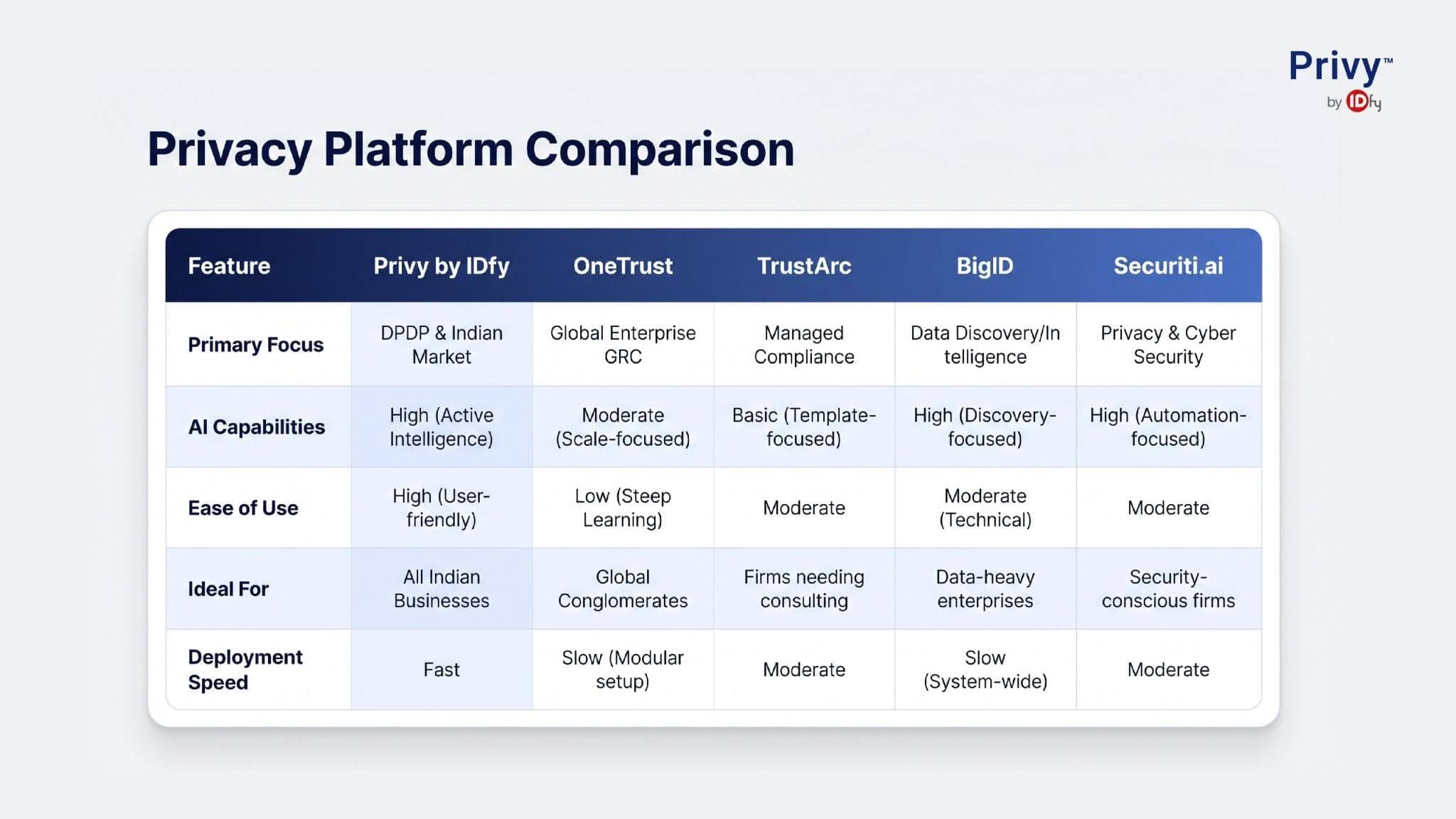
When selecting a tool, the criteria should be simple: Does it integrate with my stack, does it understand local nuances (like the DPDP Act), and does it actually reduce the workload? Here are the top 5 privacy impact assessment tools:
1. Privy by IDfy
Privy is an India-centric privacy governance platform built by IDfy to address the specific nuances of the DPDPA. It utilizes active intelligence to automate data discovery and consent orchestration, making it a popular choice for local enterprises.
- Pros:
- Local Expertise: Deeply aligned with Indian regulatory frameworks and local market cultural nuances.
- Automation-First: Strong AI-driven modules for automated data classification and Subject Rights Requests (SRRs).
- Scalability: Offers seamless integration with existing Indian ERP and cloud ecosystems for quick deployment.
- Cons:
- Regional Focus: While it meets global standards, its primary strength and community support are currently centered in India.
- Niche Ecosystem: Organizations with massive, pre-existing global compliance footprints may find fewer third-party integrations compared to global legacy players.
2. OneTrust
OneTrust is a widely recognized leader in the global privacy market, offering an expansive suite of modules that cover everything from GRC to ethical AI. It functions as a comprehensive command center for large-scale, multinational organizations.
- Pros:
- Holistic Suite: Covers an incredibly broad range of compliance needs (GDPR, CCPA, DPDPA) within a single platform.
- Extensive Integration: Boasts one of the largest libraries of third-party connectors for enterprise software.
- Cons:
- Complexity: The platform has a steep learning curve and often requires dedicated staff to manage and configure.
- Cost: The modular pricing structure can become expensive for mid-sized enterprises as they add necessary features.
3. TrustArc
TrustArc combines a robust software platform with a legacy of privacy consulting and certifications. It is particularly effective for businesses that require a blend of automated tools and expert-led compliance management.
- Pros:
- Managed Services: Excellent for companies that want a software + service model with professional advisory support.
- Strong Certification: Offers deep expertise in privacy seals and global certification standards.
- Cons:
- Less Agile AI: While dependable, its automation features are often viewed as less AI-forward than newer, specialized platforms.
- Administrative Heavy: The interface and workflows can feel more manual and document-centric compared to modern discovery-led tools.
4. BigID
BigID is a data-intelligence platform that prioritizes data hunting at a massive scale. It excels at finding and cataloging sensitive information across complex, unstructured data environments to ensure no data is left unmonitored.
- Pros:
- Data Discovery: Unmatched ability to find dark data across vast, fragmented enterprise environments.
- Deep Intelligence: Provides highly granular insights into data identity and residency for risk assessment.
- Cons:
- Workflow Narrowness: While it is a powerhouse for data discovery, its regulatory workflow and policy management modules can feel less intuitive.
- Resource Intensive: Often requires significant technical overhead to implement and maintain across an entire organization.
5. Securiti.ai
Securiti.ai positions itself as a Data Command Center, merging privacy compliance with cybersecurity posture. It leverages AI to automate complex privacy operations and is frequently used by organizations with high-security requirements.
- Pros:
- Unified Security: Effectively bridges the gap between privacy teams and IT security teams through a single dashboard.
- Advanced Automation: High-performance AI for orchestrating privacy rights and monitoring data in real-time.
- Cons:
- Global Bias: Its features and pre-built templates often reflect a Silicon Valley/Global approach, which may require customization for local Indian nuances.
- Feature Overlap: Companies only looking for simple privacy compliance may find the heavy focus on cybersecurity features redundant.
When choosing, consider if you need a tool that finds the data (BigID/Securiti) or a tool that manages the compliance workflow (Privy/TrustArc). OneTrust attempts to do both, but requires significant investment to master.
Frequently Asked Questions (FAQs)
1. What is a Privacy Impact Assessment (PIA)?
A privacy impact assessment is a strategic process used to identify and mitigate data privacy risks within a project or product. It ensures that your data handling practices comply with legal regulations like the DPDPA or GDPR and align with ethical standards to protect user trust.
2. Is a risk-based privacy impact assessment mandatory?
Yes, under many global regulations, a risk-based privacy impact assessment is mandatory for "high-risk" activities. This includes processing sensitive personal data, using automated decision-making (AI), or large-scale monitoring, where a failure in data privacy could significantly harm individuals.
3. What is the difference between a PIA and a Data Privacy Impact Assessment (DPIA)?
A privacy impact assessment is a broad term for evaluating privacy across any project. A data privacy impact assessment (DPIA) is a specific, formal requirement under the GDPR for high-risk data processing. Both serve to embed "Privacy by Design" into your organizational workflow.
4. How often should you update your privacy impact assessment?
A privacy impact assessment is a living document, not a one-time task. It should be updated whenever there is a significant change in the "data lifecycle", such as integrating new third-party APIs, changing your AI training models, or shifts in data privacy laws like India's DPDP Act.
5. How do AI-driven tools help with a risk-based privacy impact assessment?
Modern data privacy tools like Privy by IDfy automate the discovery and classification of sensitive information. This replaces manual spreadsheets with real-time monitoring, ensuring your privacy impact assessment stays accurate as your data environment scales and evolves.
Conclusion
We are moving into an era where "Privacy Engineering" will be as common a term as "Software Engineering." The privacy impact assessment is the primary tool of this new discipline. By adopting a risk-based privacy impact assessment approach and leveraging AI-powered tools like Privy, businesses can move beyond the fear of fines and toward the frontier of data-led growth.
The choice is yours: stay buried in manual spreadsheets and hope for the best, or embrace the intelligence-led future where privacy is your greatest competitive advantage.
Ready to automate your privacy journey? The landscape of Indian data regulation is shifting fast. Don’t wait for an audit to find the gaps in your strategy. Let us show you how Privy can integrate into your business and turn compliance into a superpower. Reach out to us at shivani@idfy.com for a deep dive into your privacy needs.

How to choose the right privacy impact assessment tool. Explore the best data privacy management software & understand how to conduct an assessment

Learn how to conduct a privacy impact assessment step by step. A practical guide to Privacy Impact Assessments and data privacy risk management.